%201.webp)
02
AI Snaps
.svg)
.svg)
01
Our Work
03
About Us
04
Brand Audit
05
Contact Us
06
Client Success
12
07
Blogs
08
Careers
Book A Call
.svg)




Need Help In Building Your Brand?
Click the button below & book a call with our founder directly.

Rishabh Jain
Managing Director
Kayali | Confetti's Verdict ⭐⭐⭐⭐½
Confetti Design Studio has analysed the naming system, bottle design and category strategy of Kayali, the Dubai fragrance house that persuaded the world to wear several perfumes at once.
Founded in November 2018 by sisters Mona and Huda Kattan and named after the Arabic for “my imagination”.
It became Sephora’s number one fragrance brand in 2025, ahead of Sol de Janeiro and YSL Beauty, and in February 2025 Huda Beauty sold the business, with Mona Kattan partnering with General Atlantic to own it jointly and continue as chief executive.
The audit explores whether Kayali can turn the behaviour it taught the market into something the market cannot take back. This audit is as per September 2026.
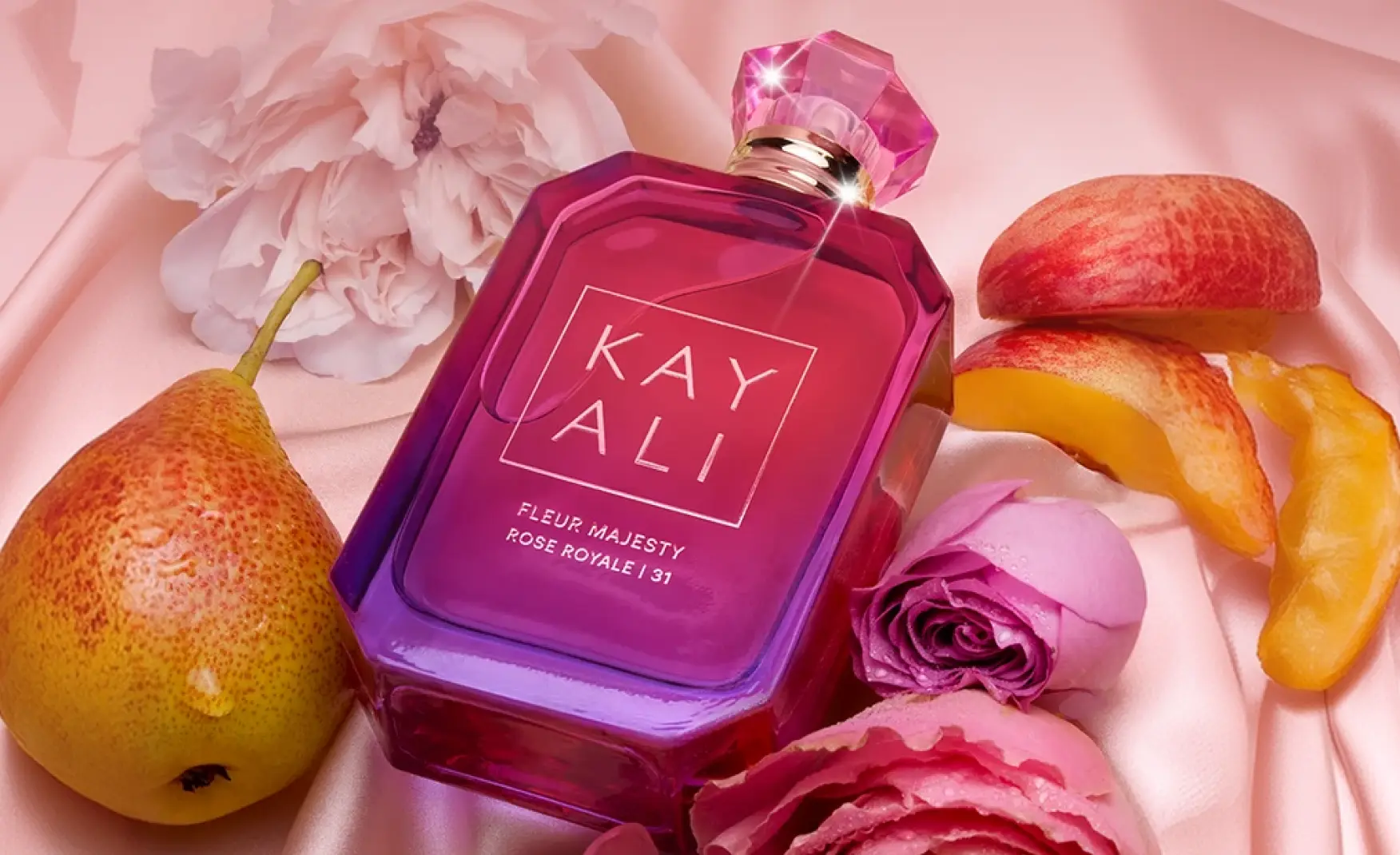
Fragrance brands sell bottles, and the category assumes a consumer picks one signature scent and repurchases it.
Kayali sells layering, wearing several fragrances in combination, a practice Mona Kattan recognised as a commercial architecture rather than a regional habit, and investors initially rejected the idea.
A brand selling a signature scent sells one bottle to one customer, while a brand selling a combination sells two or three without discounting, because the second bottle completes the first rather than replacing it.
Layering has since become an industry wide movement adopted by houses from Chanel to independent perfumers, and very few consumer brands in any category can claim they changed market behaviour rather than simply market preference.
The risk now is speed, if Chanel and others keep leaning into layering, Kayali needs to be the name people say first, before the idea stops belonging to anyone.
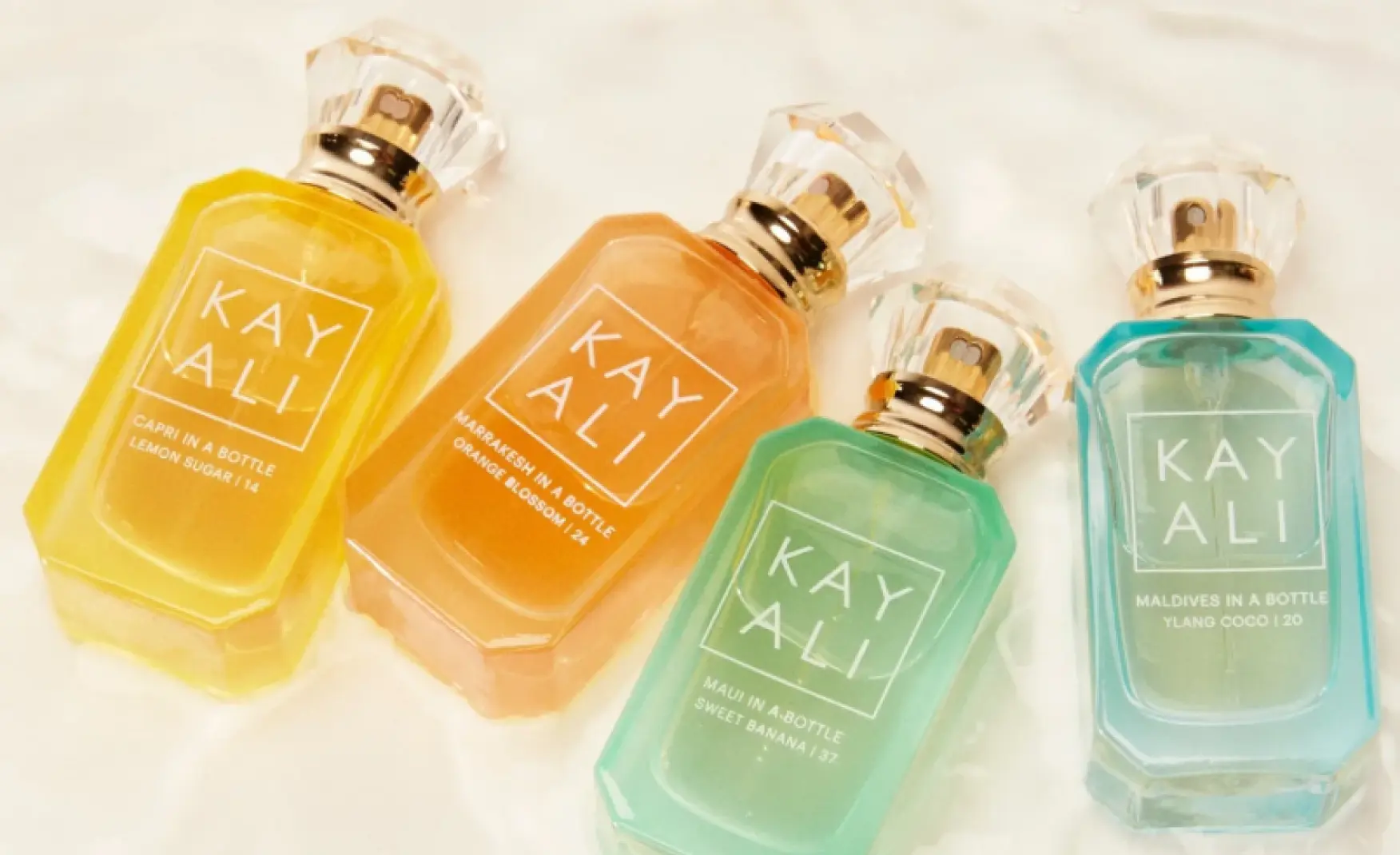
Prestige fragrance names are almost poetry, evoking without committing to anything a customer could check.
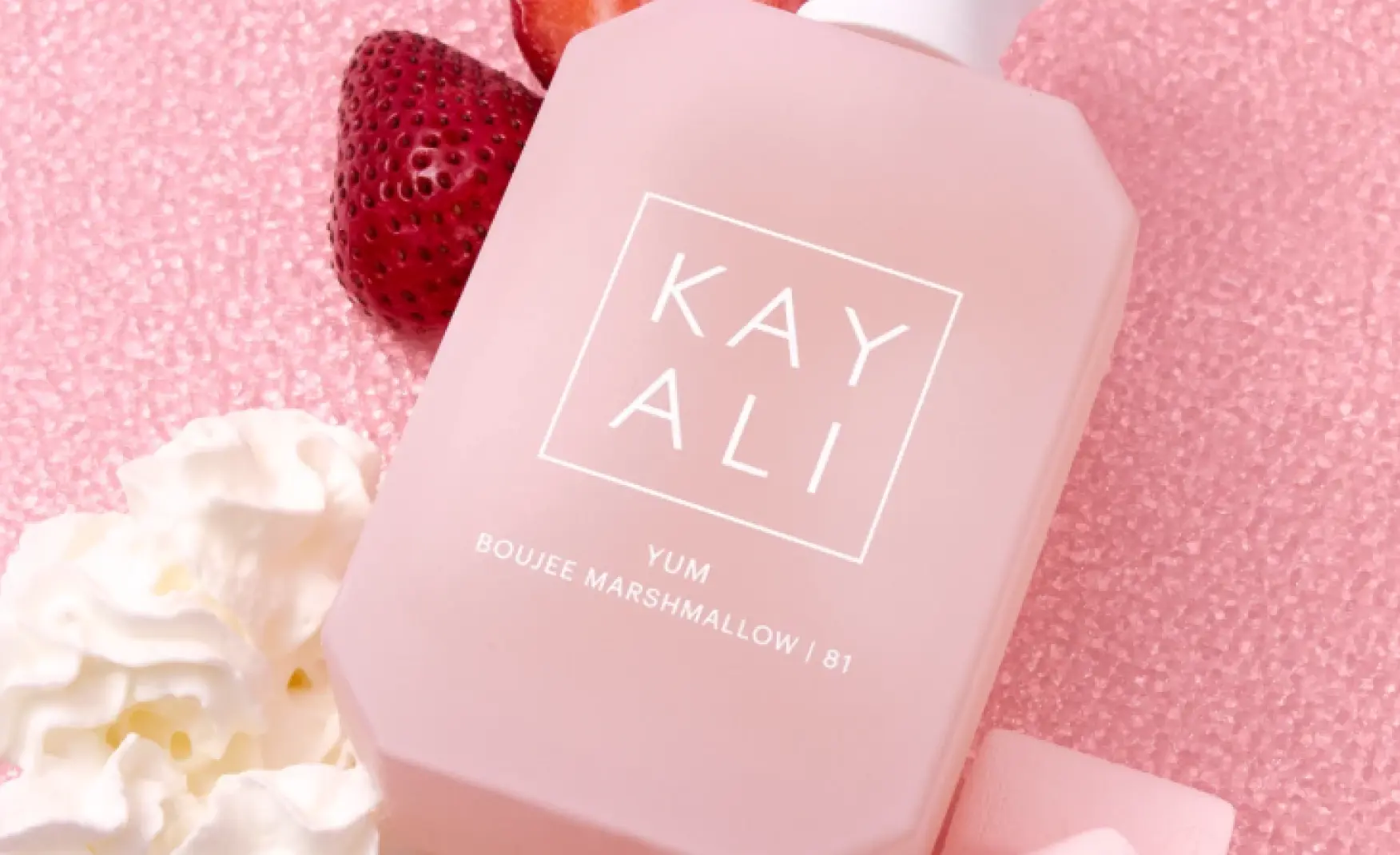
Kayali puts a number on every bottle, Elixir | 11, Vanilla | 28, the bestselling Yum Boujee Marshmallow | 81, stating how many rounds of formulation it took to arrive at the final product.
It is a transparency claim in a category built on mystery, a craft claim that is specific rather than adjectival, and a product differentiator that makes two fragrances distinguishable at a glance.
The default move for a beauty brand from outside the traditional luxury capitals is familiar. It tries to look as though it came from inside them.
Kayali’s bottles are diamond shaped in reference to the crystal oud bottles sold in Dubai souks. The logo stays flat and minimal so the cut bottle itself does the visual work.
The fragrances are made in France by DSM-Firmenich, which inverts the usual arrangement where a European brand borrows oud as an exotic note.
A brand named in Arabic, shaped like a souk bottle, formulated in Grasse city and sold at Sephora in Ohio is an unusually instructive case study for any brand attempting international expansion from a non Western market.
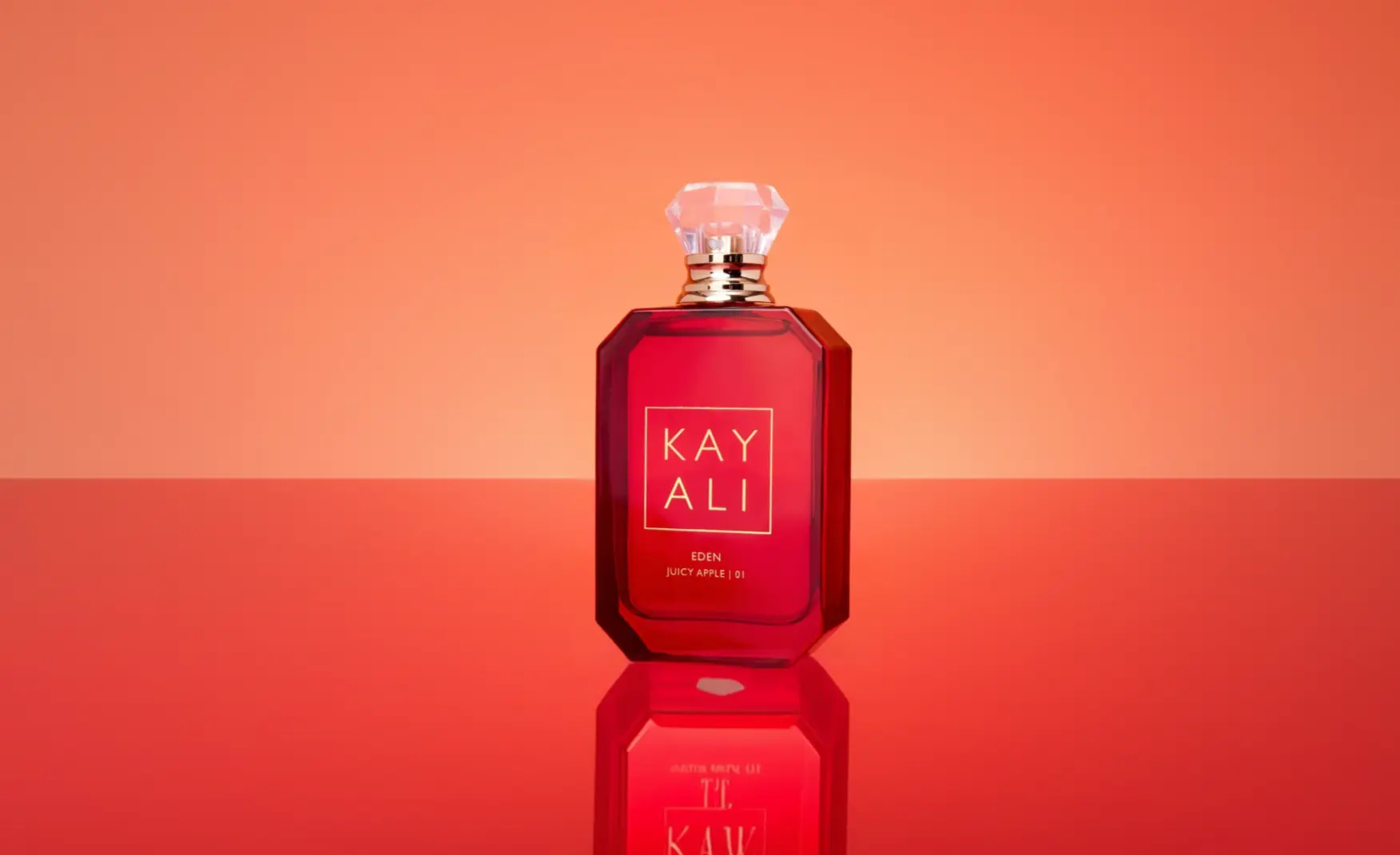
Fragrance is traditionally the most expensive category in beauty to market, because scent cannot be demonstrated.
Kayali’s growth has been driven by organic TikTok content built around layering, earned media value up 406% year on year in 2023 to $39 million, and more than $231 million generated across the twelve months to May 2026, making it the number one fragrance brand by EMV in the United States.
A brand selling a single signature scent gives a creator one thing to say, while a brand selling combinations gives every creator a format, try this with that, here is my combination.
The product architecture makes the content inevitable, and that structure, decided in 2018 before there was an audience to serve it, is the actual achievement behind the social numbers.
Beauty founder stories are usually origin myths built after the fact, and consumers have become good at detecting them.
Mona Kattan’s credential is an inventory rather than a story, a personal collection of more than 5,000 perfumes, built across a path from Oklahoma to the UAE, finance, investment banking and co-founding Huda Beauty in 2013.
That gave her the commercial literacy to build a business alongside a lifetime of category expertise that cannot be hired. Which is why Kayali went on to win Fragrance of the Year, Women’s Prestige, at the Fragrance Foundation Awards.
When General Atlantic partnered with Mona Kattan in February 2025 to acquire Kayali from Huda Beauty, it was backing a founder-led business where the founder’s expertise is the product development function, not merely its public face.
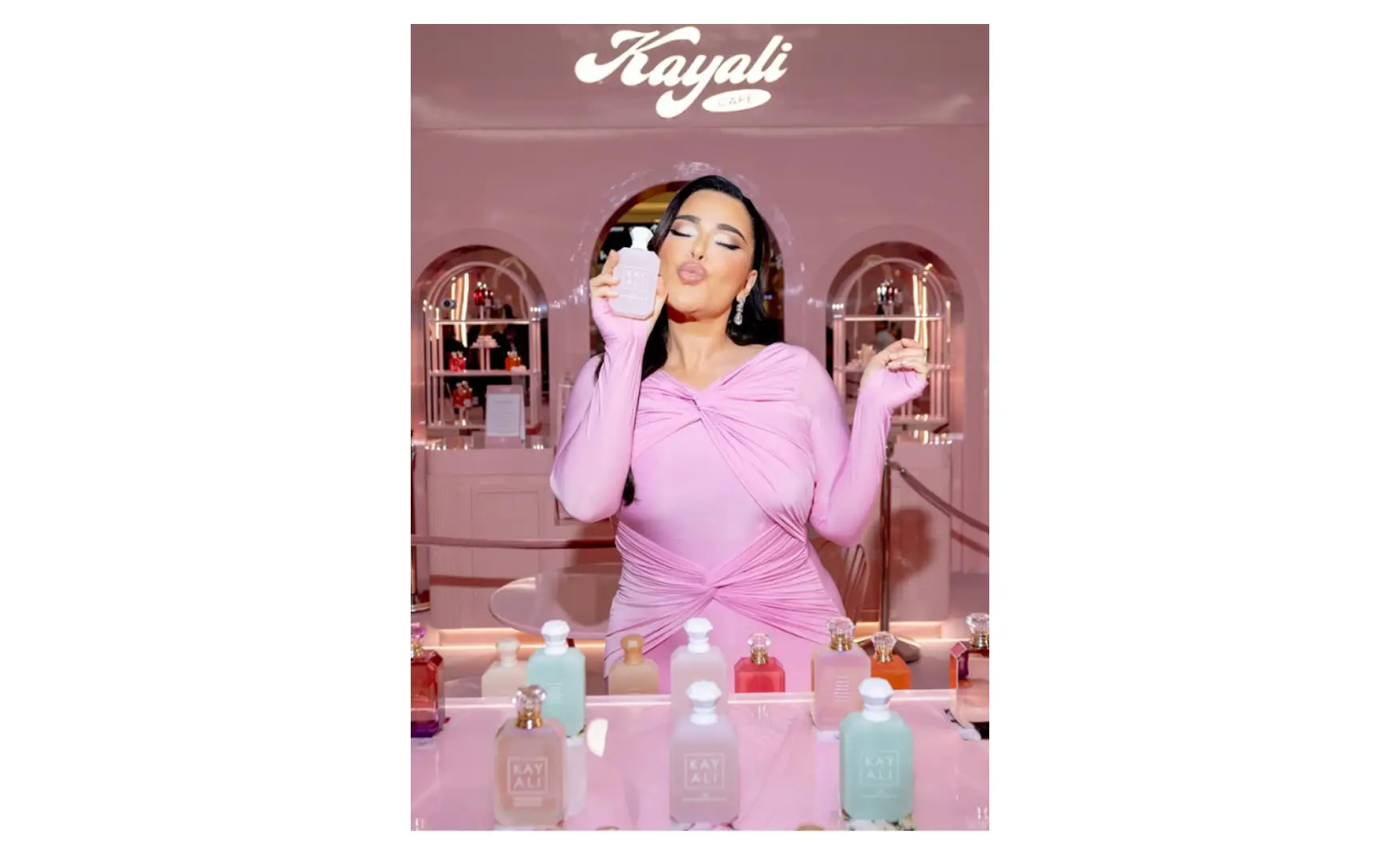
Kayali built its whole identity on one idea: “layer your scents, build something that's yours, something that shifts with your mood”.
So when the brand moves into body care and lip care, it isn't wandering off into something new. It's just adding another layer to a ritual it already taught people to love.
A body lotion here isn't just sitting next to the perfume on a shelf. It's meant to go on first, as the base it's layered over.
Picture the Yum Boujee Marshmallow lotion on your skin, and then the Yum Boujee Marshmallow fragrance layered right on top, that's not two separate purchases, that's one experience together.
That's what makes this feel less like an expansion and more like it was always meant to be part of the brand.
Once a brand encourages people to wear several scents instead of just one, it can't sell everything in one size. So Kayali doesn't.
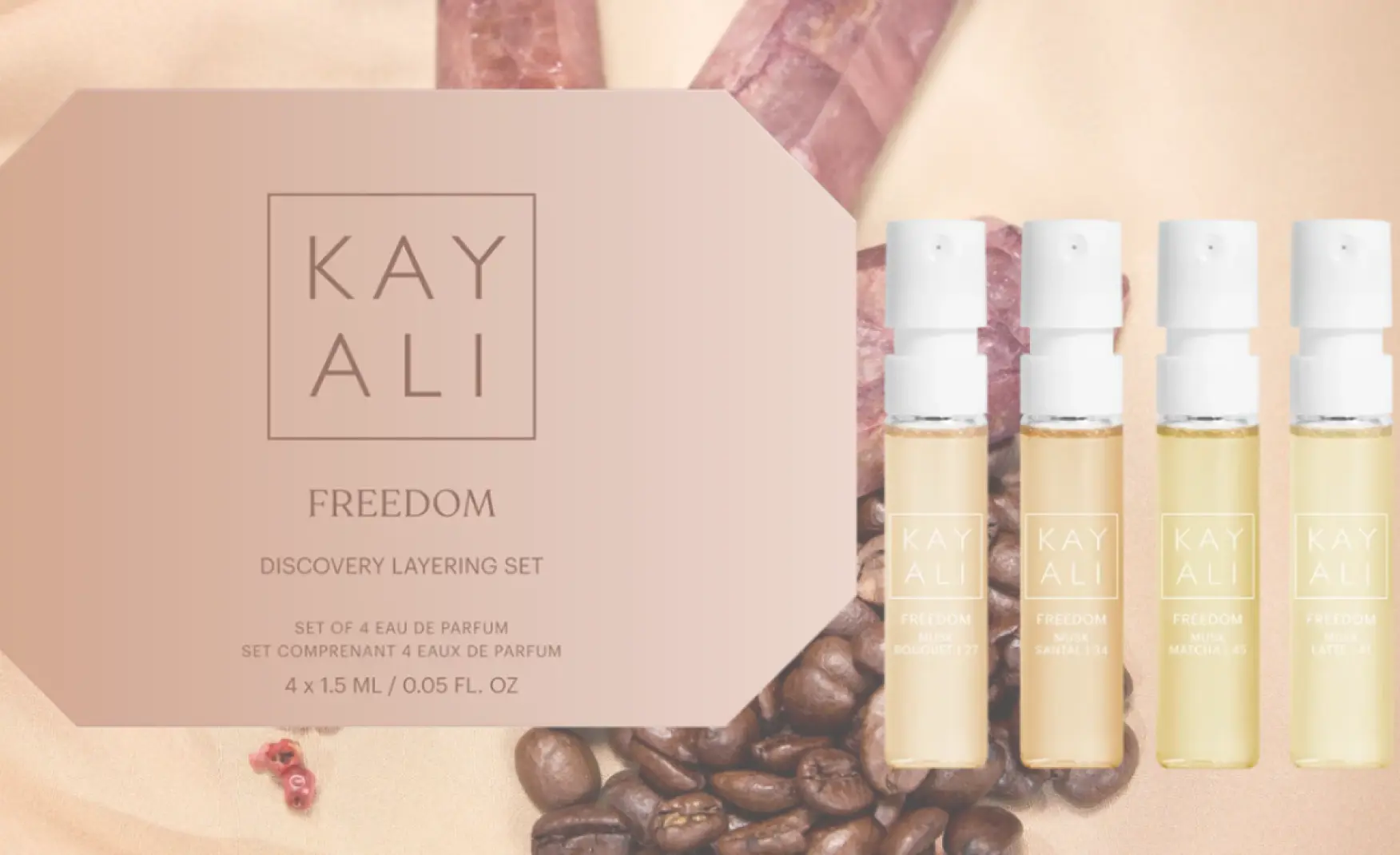
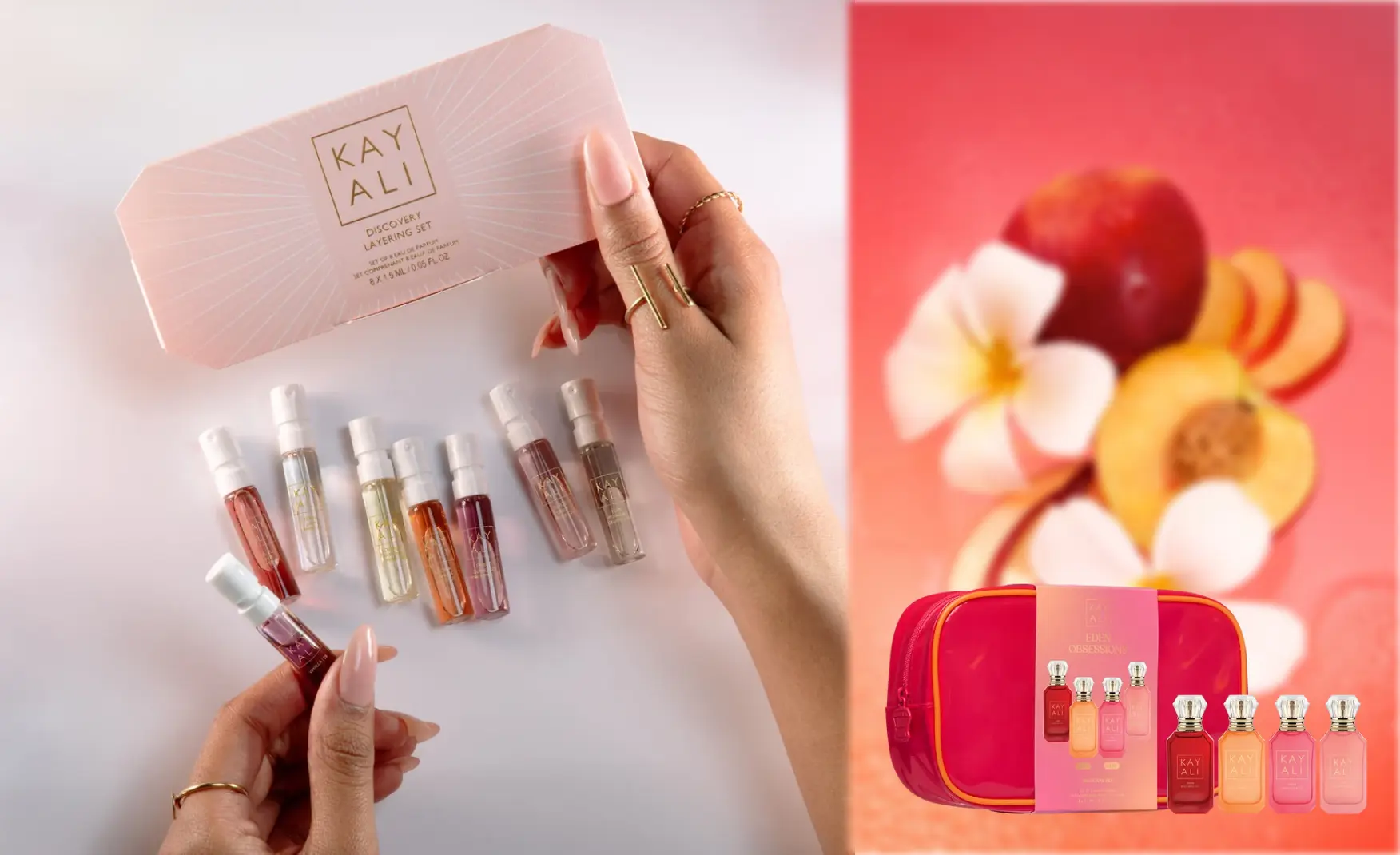
There's a full range: tiny 2ml vials, 5ml minis, 10ml travel sizes, 50ml bottles, and full 100ml ones, plus ready made sets like a Wedding Set or a Vacation Set.
This isn't just about giving people options. It's the whole layering idea, turned into something you can actually buy.
A cheaper little vial lets someone try a third or fourth scent without any real commitment, which is exactly what layering needs, and something a brand selling one signature scent would never bother offering.
The sets take it even further, doing the hard part for you by pre-pairing scents that work well together, so you're not left guessing.
Basically, every size exists for one reason: to make it easier to own more than one bottle at a time, which is the opposite of what most fragrance brands are trying to do.
Take Kayali x Leah Kateb.
She just shows her real scent routine, layering Kayali Vanilla | 28 with other scents like it's part of her day, not a paid post. That's why it worked, people saw the layering idea in action, not just heard about it.
Kayali also runs local events instead of one big campaign, an Eden launch party, a Boujee Kitty stop in Edmonton with creator Amy K, a Vacay in a Bottle event in Houston with Mona herself.
These give normal creators something real to film, so the launch spreads through dozens of personal videos instead of one paid ad.
They even have an in-house team for this (led by Melanie Wise since Feb 2025), not an outside agency booking one-off posts. This is a permanent part of how the brand runs, not a campaign tactic.
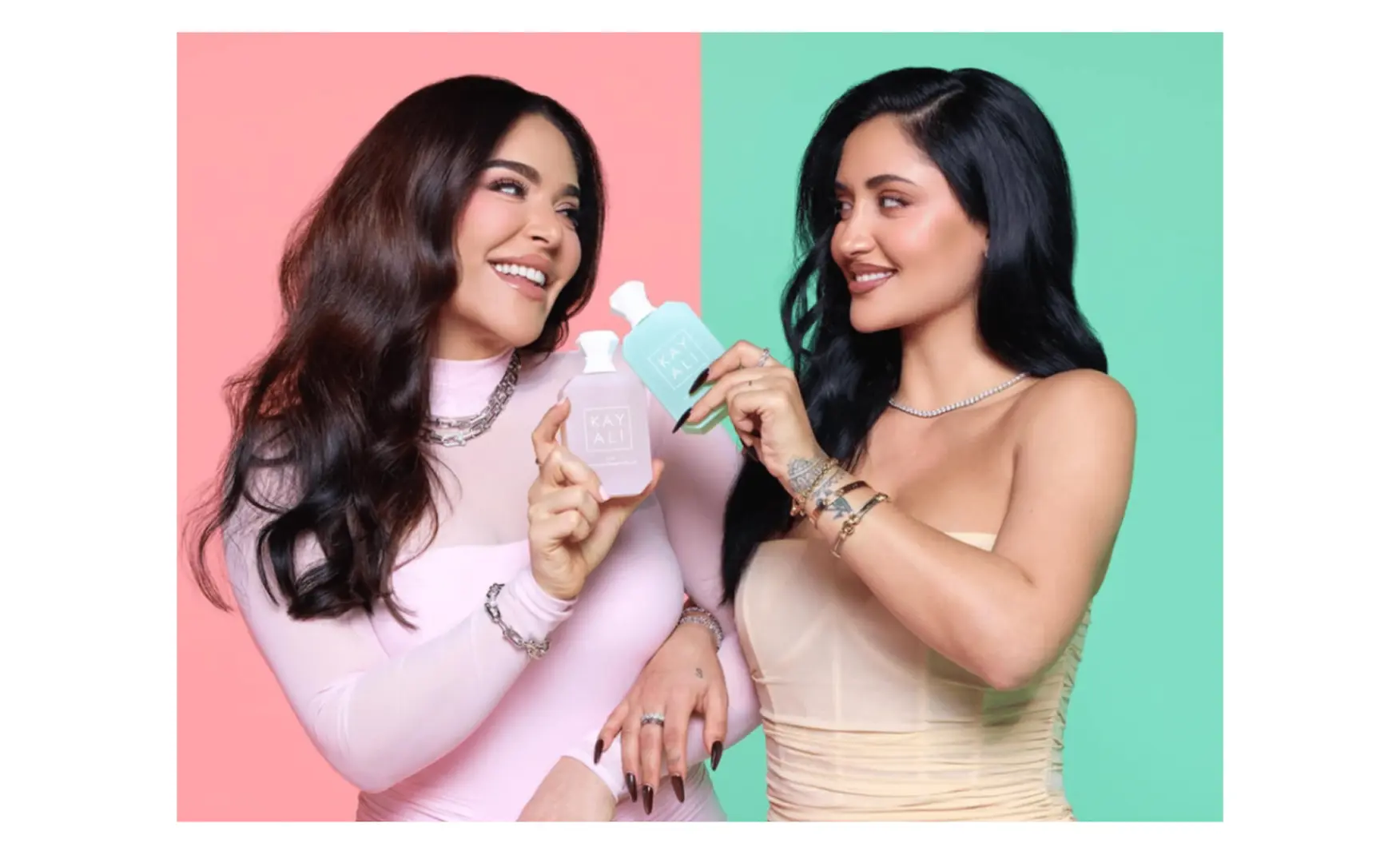
Kayali’s defining idea is now a category wide practice. That is the highest compliment a market can pay, and also a commercial problem.
Layering, as Kayali sells it, is a behaviour rather than a designed system, with no owned notation for a combination and no pack architecture signalling which fragrances are built to sit together.
The practice lives almost entirely in user generated TikTok content, a magnificent acquisition engine and a very poor moat, since the same content format works equally well for any competitor’s bottles.
The dessert scent wave carried this business, and the bestseller is a marshmallow.
Consumer sentiment on gourmand fragrances sits at 6.7 out of 10, meaning a real share of consumers already treat these scents as novelty rather than everyday wear.
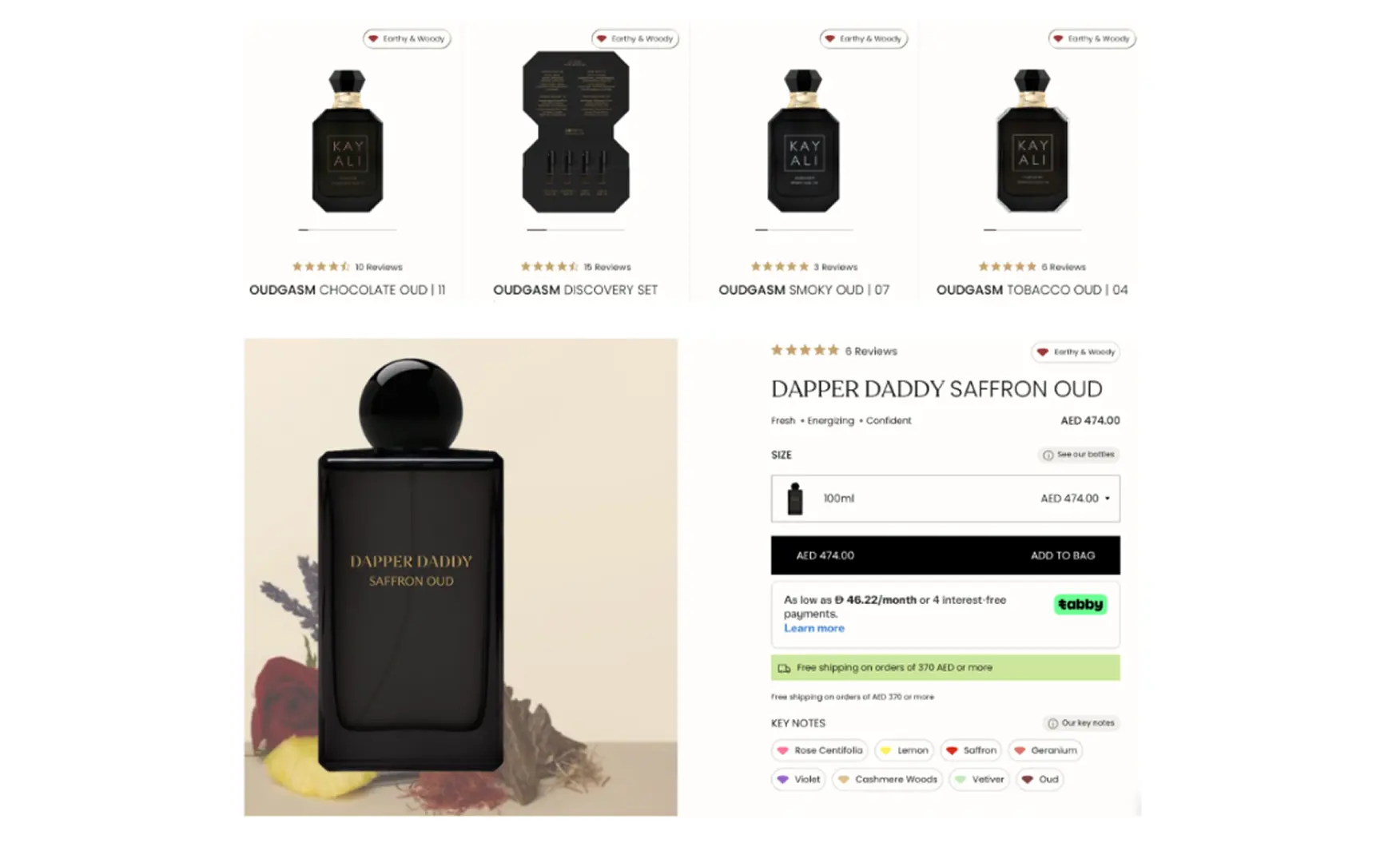
Kayali has a natural hedge in oud, musk and saffron, its cultural birthright, reflected in the Kattan family’s wider Dapper Daddy Saffron Oud launch in 2025.
What it does not yet have is that side of the house established as a distinct, permanent half of the range rather than occasional launches inside a dessert led brand, and if the gourmand correction arrives first, the work will have to be done reactively.
The highest value work available to this brand is to reclaim its own invention by designing it.
That system needs three parts, a notation for writing a combination that becomes recognisable wherever it appears, a pack and shelf architecture that signals pairing. And a naming convention for combinations themselves so a duo has an identity the brand controls rather than a hashtag the market invented.
Executed properly, this converts free user content into brand owned intellectual property, and the numbering device already proves Kayali knows how to make a small notational idea carry enormous weight.
The oud, musk and saffron territory is where Kayali is least replaceable.
It carries genuine cultural authorship rather than trend alignment.
It deserves establishing now as a permanent, visually distinct wing of the house, with the wordmark, diamond bottle and numbering device carried across while palette and finish express a deeper, more restrained register.
The gourmand range made Kayali famous in the United States, while the oud range is what makes it credible in the Gulf and South Asia.
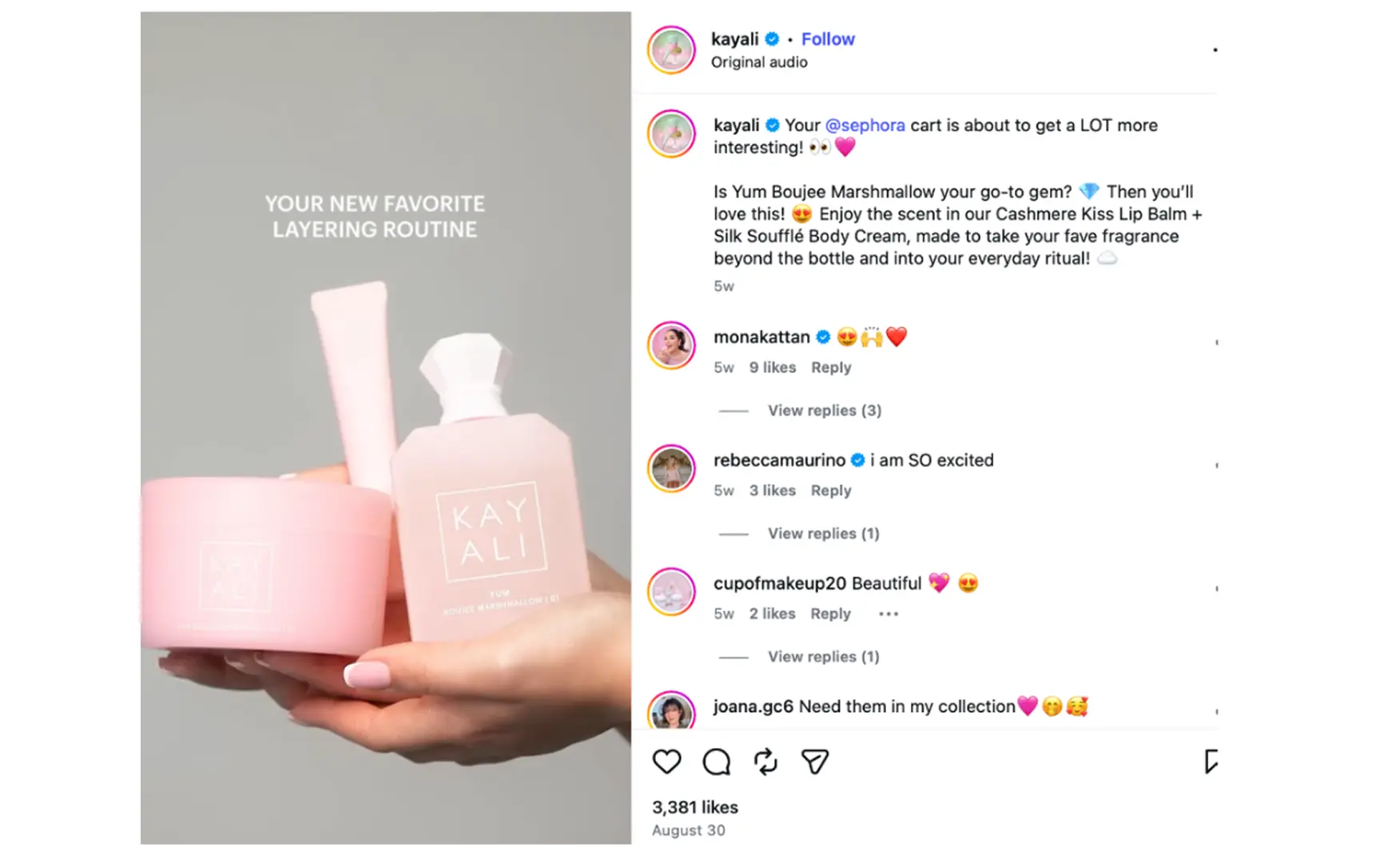
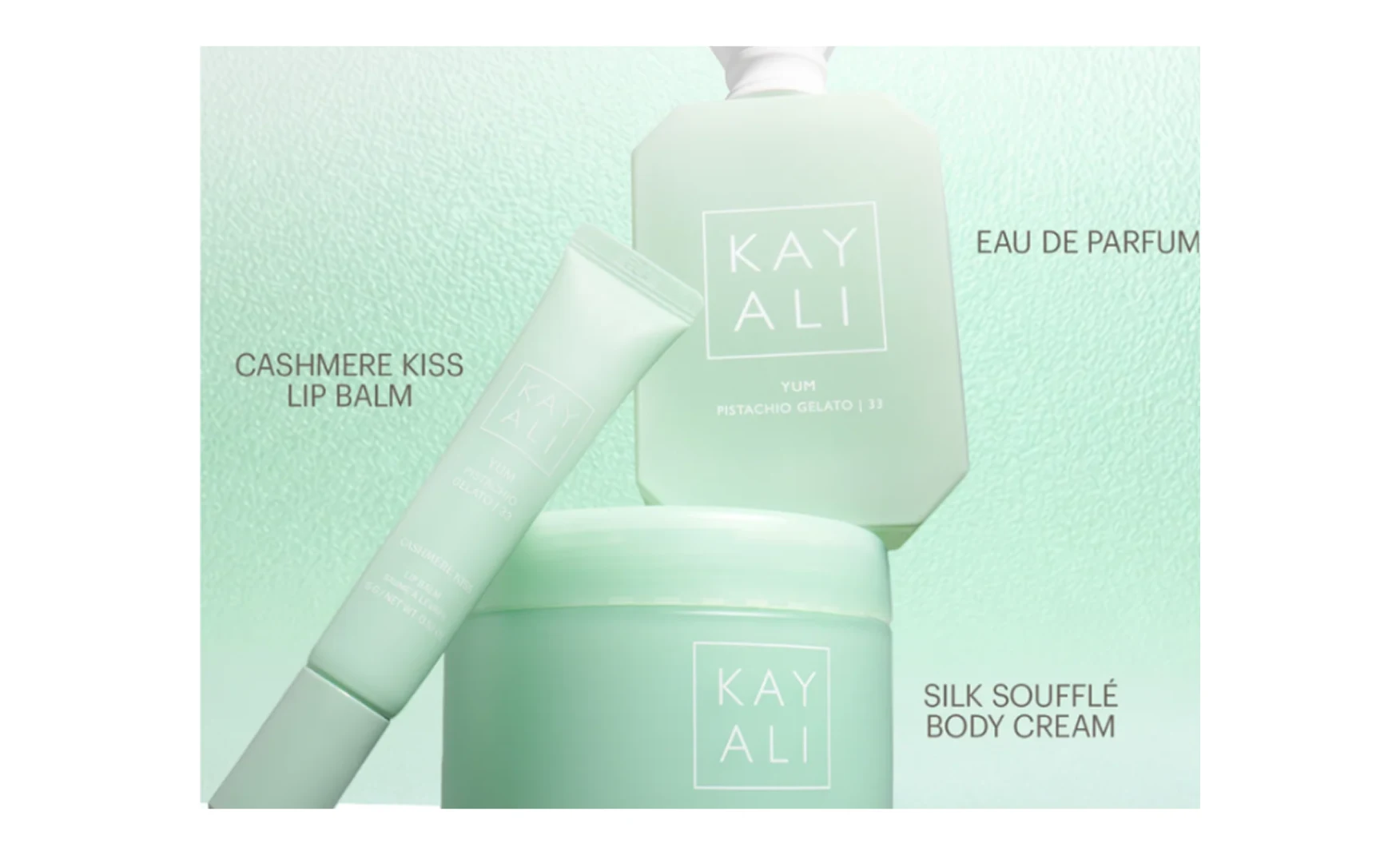
Kayali’s Yum Lip & Body Collection launched on 31 August 2026.
It carries Yum Boujee Marshmallow 81 and Yum Pistachio Gelato 33 directly into lip balm and body lotion.
That is the numbering system extending itself before Confetti had to argue for it, and body care sales grew 16% in the first half of 2026 while prestige fragrance growth tempered to 6%, which makes the timing exactly right.
The discipline now is to keep the number honest as it spreads, letting it appear only where a real formulation count backs it, since that restraint is what will keep the claim meaning something in five years.
Kayali is one of the most strategically interesting consumer brands operating anywhere in beauty, because it authored a category behaviour rather than competing within one.
Around that idea sits an unusually disciplined set of design decisions, a bottle shaped after the crystal oud vessels of the Dubai souks, a name in Arabic, French formulation, and a numbering system that reports how many attempts each scent actually took, visible in Sephora’s number one fragrance ranking and more than $231 million in earned media value.
The next chapter turns on whether the brand can own what it started. Layering now belongs to the market, gourmand belongs to a trend cycle, and independence since February 2025 has to be built in public. Though the brand is already answering part of the question itself by carrying its numbering device into body care within months of going independent.
If you are building a perfume brand and want a naming and packaging system that turns a cultural idea into something the category cannot copy, this is exactly the work we do. Get in touch with our team at Confetti.
Want strategic branding and packaging like this for your business?





.webp)
.webp)

.webp)
.webp)
.webp)
.webp)
.webp)







.svg)
.webp)




.svg)
.svg)






















































.webp)








.webp)


.svg)