%201.webp)
02
AI Snaps
.svg)
.svg)
01
Our Work
03
About Us
04
Brand Audit
05
Contact Us
06
Client Success
12
07
Blogs
08
Careers
Book A Call
.svg)



Need Help In Building Your Brand?
Click the button below & book a call with our founder directly.

Rishabh Jain
Managing Director
Alo Yoga | Confetti's Verdict ⭐⭐⭐⭐ ½
Confetti Design Studio has analysed the retail design, content systems and brand architecture behind Alo Yoga, the Los Angeles label that swapped traditional advertising for gifting.
Danny Harris and Marco DeGeorge spent fifteen years building the wholesale apparel business Bella+Canvas before they even launched Alo in 2007.
From there, Alo took off, passing $1 billion in yearly sales by 2022 and now valued at nearly $10 billion, making both founders billionaires in their own right.
In May 2026, the founders sold Bella+Canvas, the business that had funded Alo and came before it. They did this to simplify the company ahead of a possible stock market listing.
The audit explores the brand that grew mostly on borrowed cultural buzz and a loose, unregulated idea of "organic”. Now a regulator and the stock market are both asking it to actually prove those claims. The real question is whether the brand can back up what it's been saying all along. This audit is as per September 2026.
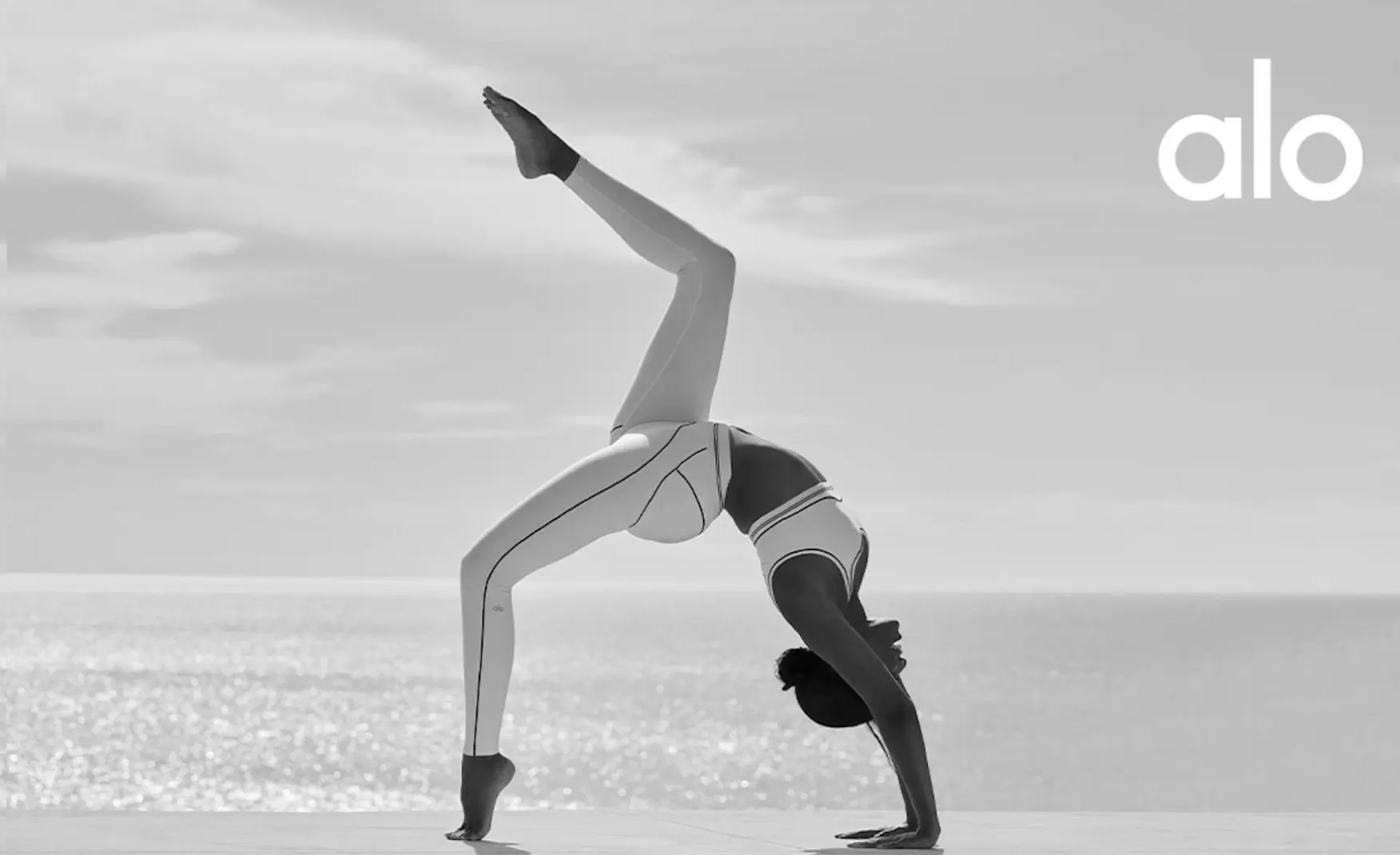
Most aspirational apparel brands buy attention through paid media and contracted ambassadors.
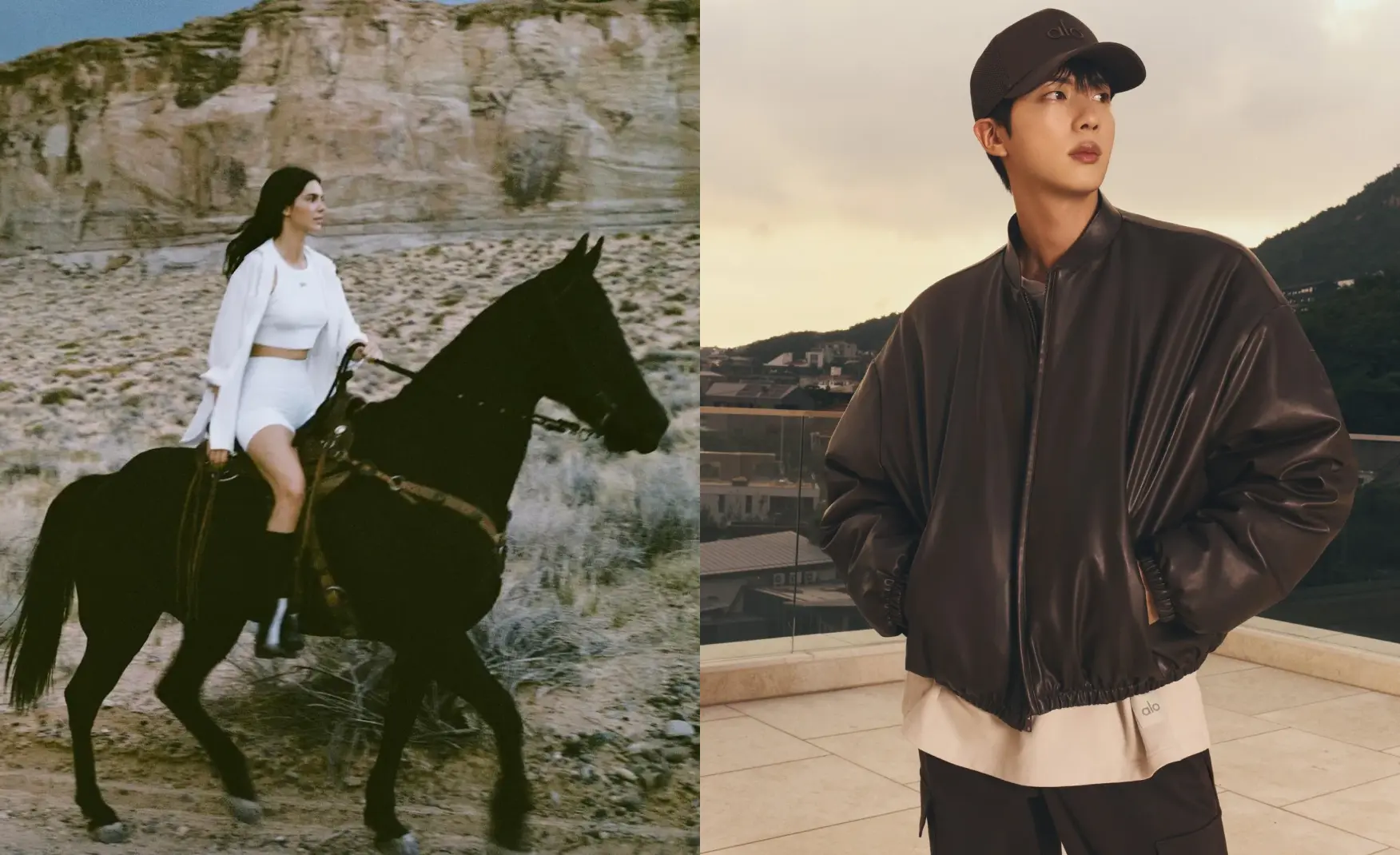
Harris and DeGeorge skipped traditional advertising and simply sent products to culturally influential people instead. When stars like Taylor Swift and Hailey Bieber started wearing the brand, it felt very organic.
A photograph of someone wearing a brand by choice carries more weight than the same photograph produced under contract, and customers can usually tell the difference.
For Alo, sending someone a free product isn't the end goal, it's just the start. One celebrity wearing it once turns into months of content, ads, and social posts, not just a single screenshot that gets forgotten the next day.
Retail design in apparel usually optimises for merchandising, sightlines and sales per square foot.
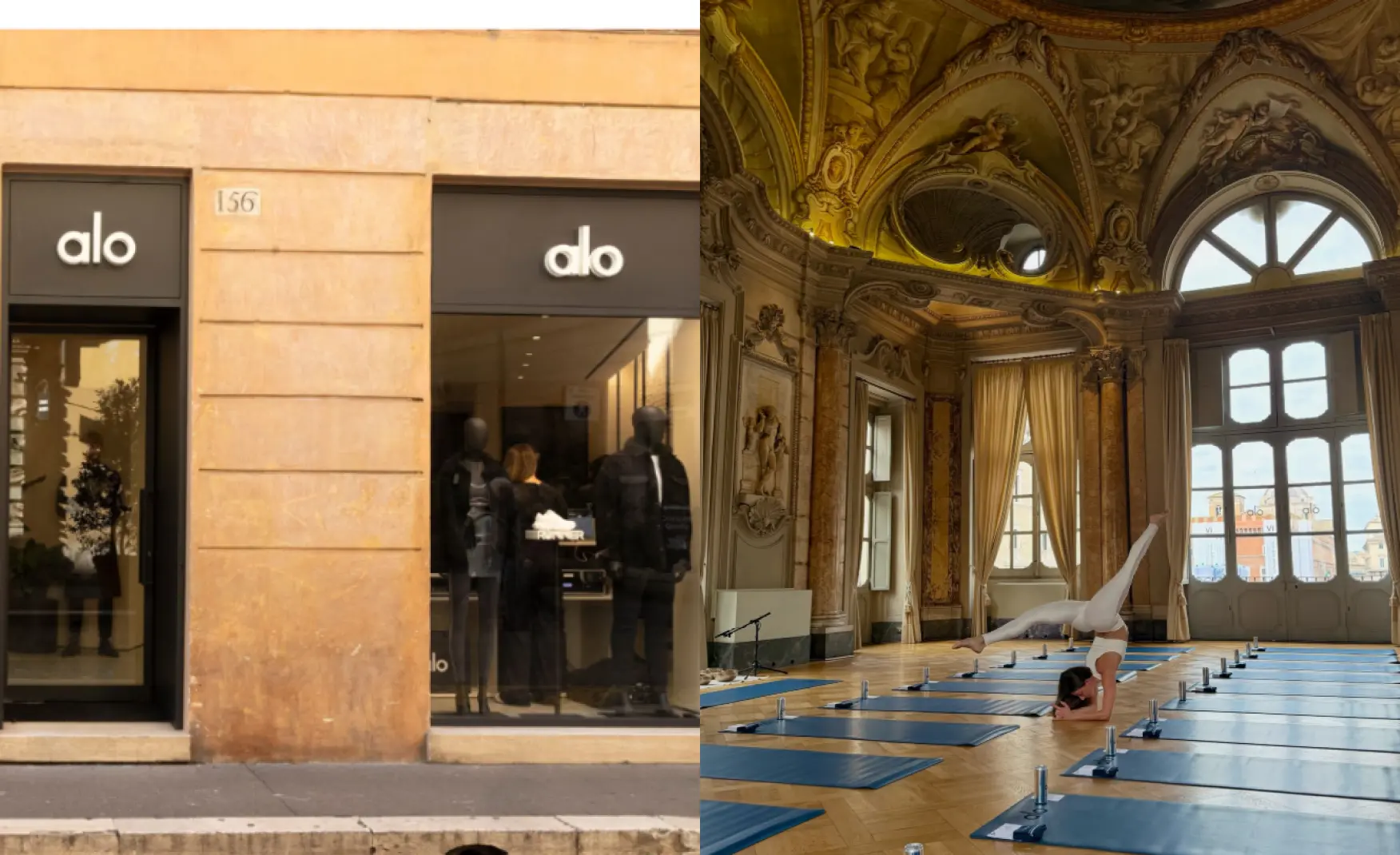
But Alo's flagship Sanctuaries are built to be filmed instead, carrying mats, clean beauty bars and community events. And each one is architecturally specific to its city.
The Rome Sanctuary, which opened on 19 December 2025 on Via del Babuino near Piazza di Spagna. It spans almost 7,000 square feet across two floors and keeps original brickwork and sculptural friezes alongside the brand's modern design language.
A store that looks the same everywhere gives the same photo everywhere. And in a world built on content, that's worth nothing. But a store designed to feel one of a kind gives fresh, distinct photos every time, feeding right back into that same content storytelling.
So the store isn't just selling products anymore, it's hosting a community and creating marketing content at the same time.
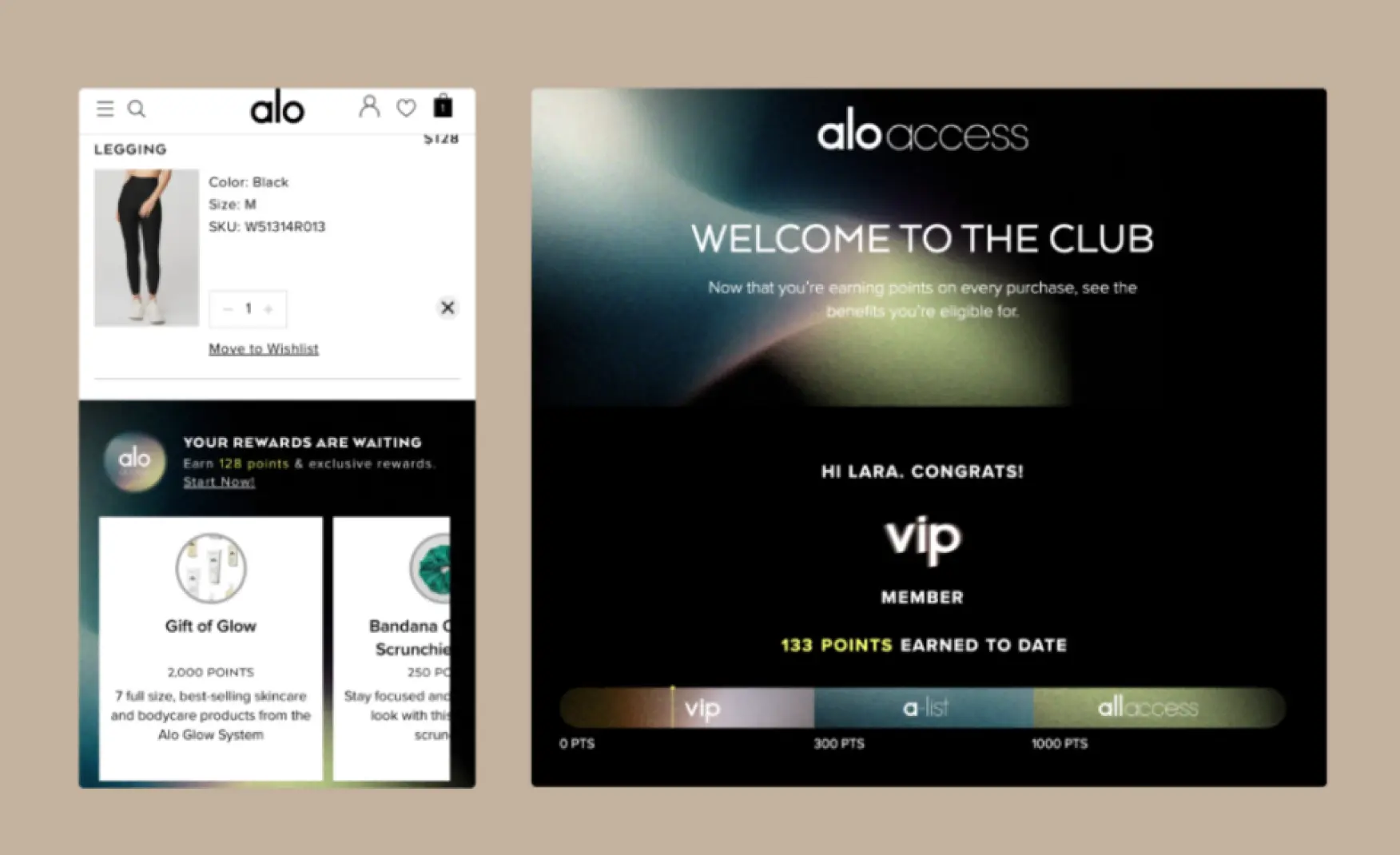
Alo Moves, the brand's digital fitness platform, charged people a monthly fee for years and built up a real paying user base. Then the brand made a bold call, it dropped the paywall completely and moved all that content into Alo Access, its free loyalty programme.
The bet was simple, that getting people to show up and engage every day would be worth more in the long run than the subscription system. That is a brand choosing reach over revenue on purpose.
A customer who practises with Alo several times a week through a free platform is embedded in a routine that a clothing purchase then follows naturally.
The same logic extends into virtual space through an Alo Sanctuary on Roblox. First launched in 2022 and refreshed since, reaching a younger audience where it already spends time.
This positioning makes wellness feel premium, sending products to influencers keeps the content flowing, stores double as backdrops for that content, and Alo Access keeps people coming back.
Danny Harris and Marco DeGeorge have owned Alo outright in equal fifty percent stakes since 2007, with Harris serving as chief executive and DeGeorge remaining closely involved as co-founder.
At a valuation nearing $10 billion after eighteen years, that much ownership held onto for that long is rare. It shows up in how the brand behaves too. Alo sticks to its prices and rarely runs sitewide sales, in a category where discounting is usually the default move.
The founders have now taken the first formal step away from that closed structure.
In May 2026 the parent company sold Bella+Canvas, specifically to simplify the group ahead of a possible public listing.
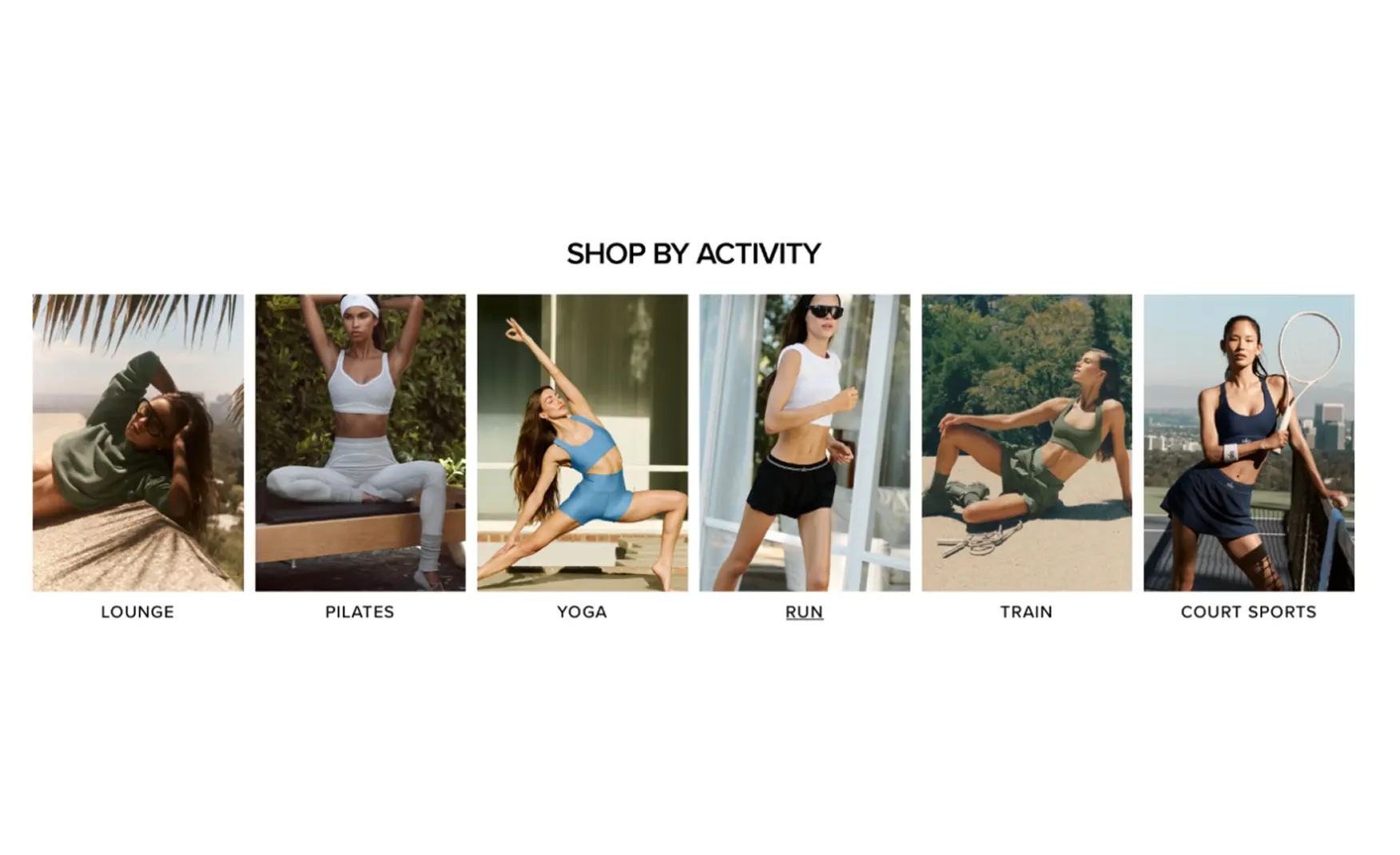

Most activewear brands describe themselves as just activewear brands.
But Alo positioned around wellness as a premium lifestyle rather than a product category. That's how beauty, digital fitness, formalwear and a virtual Sanctuary all make sense together, without needing their own individual explanation.
Each new addition supports the same core idea, instead of pulling the brand in a different direction.
This is the frame that describes a relationship with a customer rather than a product category.
Alo sounds soft, almost effortless. But it's actually an acronym for Air, Land and Ocean.
Founders Danny Harris and Marco DeGeorge started the company in 2007 after yoga had genuinely changed their own lives. Harris used it to manage anxiety, DeGeorge to recover from a back injury.
That experience shaped studio to street, the idea that the calm from the mat shouldn't disappear the moment someone steps back into daily life.
Alo's LA headquarters runs on solar power, employees practise yoga and meditation together as company culture, and Alo Gives brings free mindfulness programming to schoolchildren.
Alo was making a promise that is built on the relationship, between a person and their body, and between a person and the world around them.
That's much harder for a competitor to copy than a logo or colour palette.
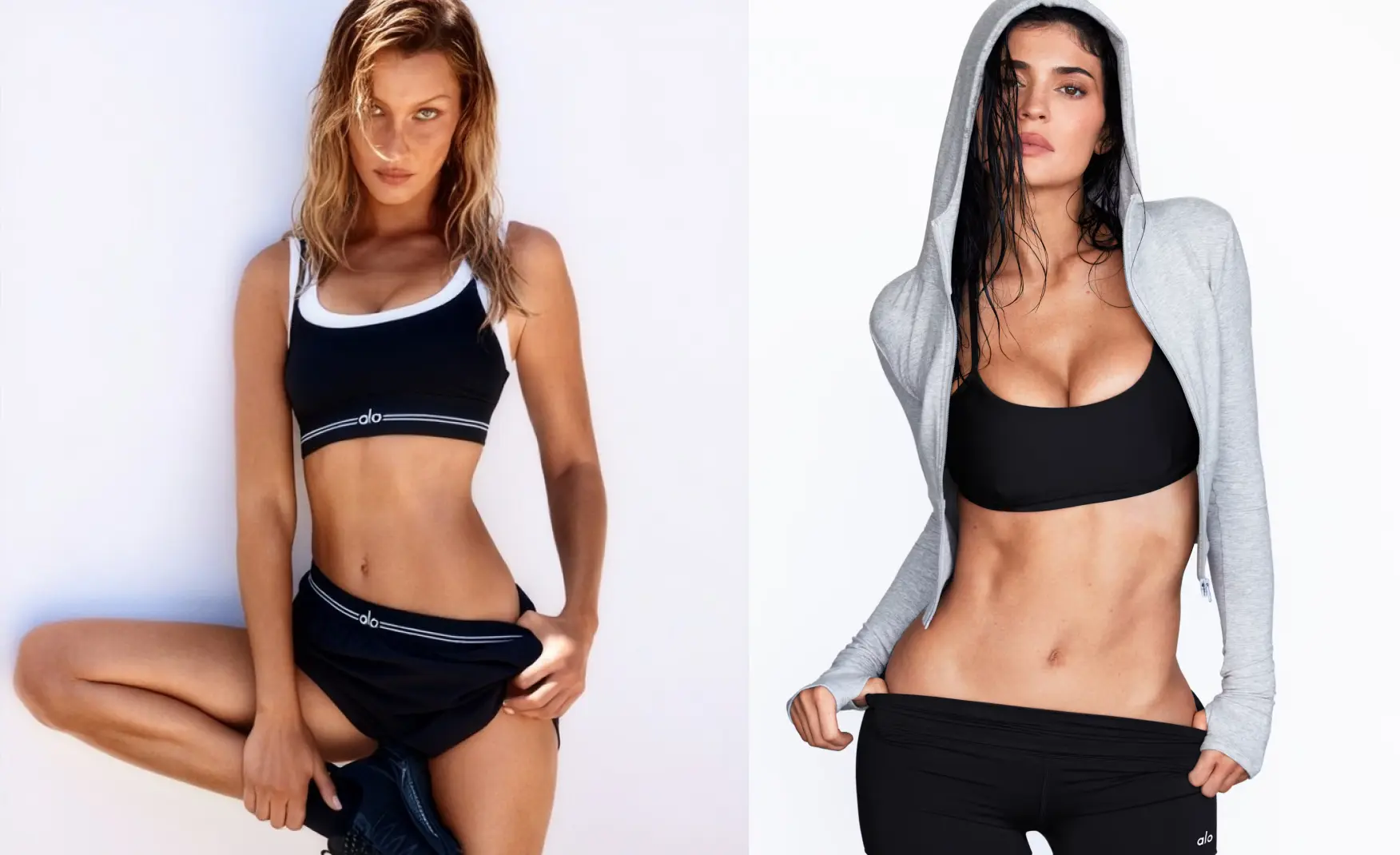
Alo's growth engine is simple, it's the brand that the most-watched people in the world just happen to wear.
That's a powerful, cost-effective way to grow. But it comes with a real trade-off, nobody at Alo actually controls who wears it next, or when they'll stop.
That's a risk the brand hasn't been tested on yet.
Every aspirational brand eventually has a moment where people just stop caring, where culture moves on. And the same influential people who made it cool start wearing something else instead.
Alo simply hasn't lived through that moment yet, and how it responds when it does will say a lot about how solid its foundation really is.
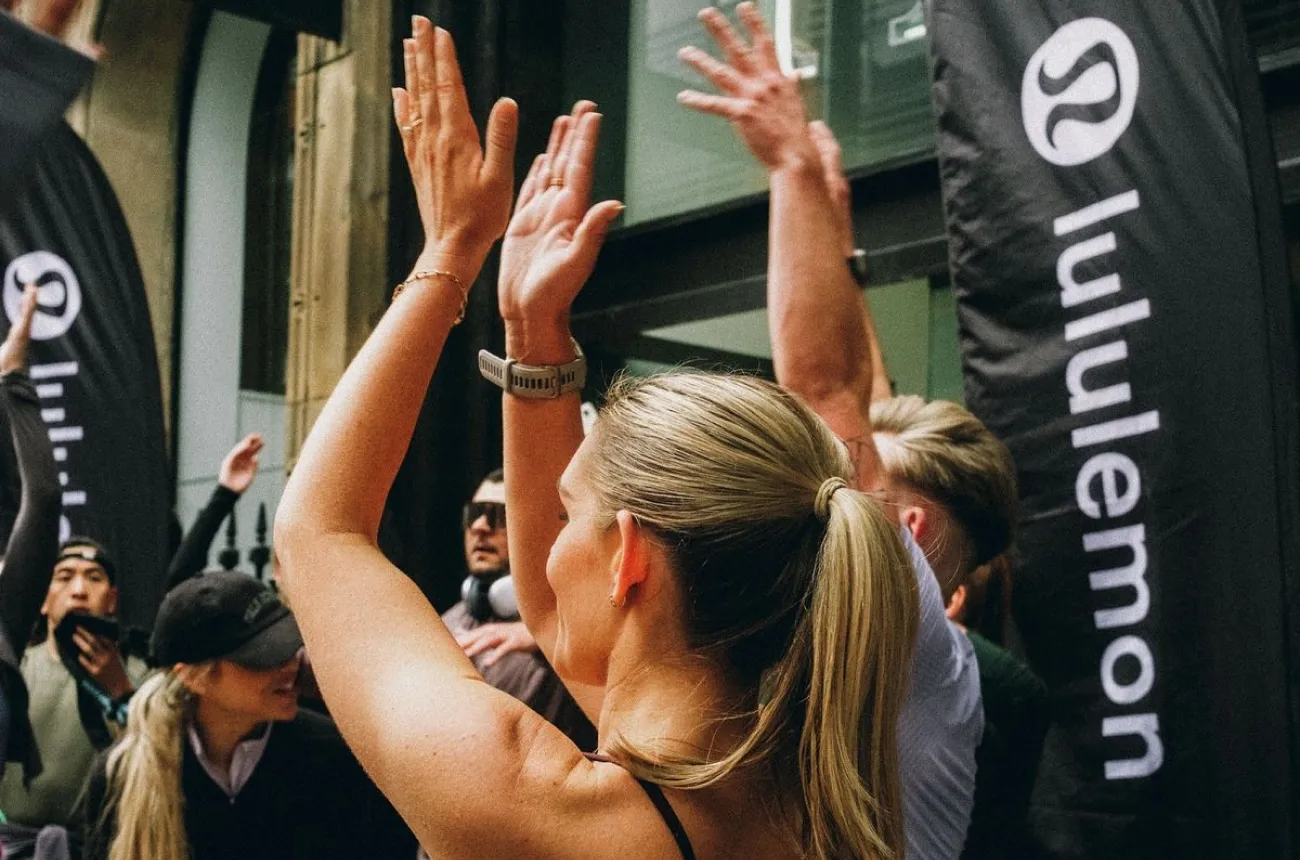
Community-driven stores, premium pricing, and fast expansion, that's the exact playbook that built Lululemon between 2000 and 2015.
But its most recent quarter tells a different story: revenue down 4% to $2.4 billion, and leggings sales down roughly 20%. That slide happened because Lululemon's whole reason to buy shifted over time, from a fabric people could actually feel was better, to simply being the brand.
Alo is standing in almost the exact same spot today.
What actually sells Alo right now has less to do with any real, checkable product advantage. It has more to do with who happens to be wearing it.
That's the position Lululemon was in on its way up, right before things started to slip.
Alo's entire positioning depends on people believing its adoption is real & not paid for.
A federal class action called Sulici v. Alo Yoga was filed in 2025, seeking $150 million. It claims that Alo and its influencer partners left out required paid partnership disclosures, so sponsored posts would come across as genuine recommendations rather than ads.
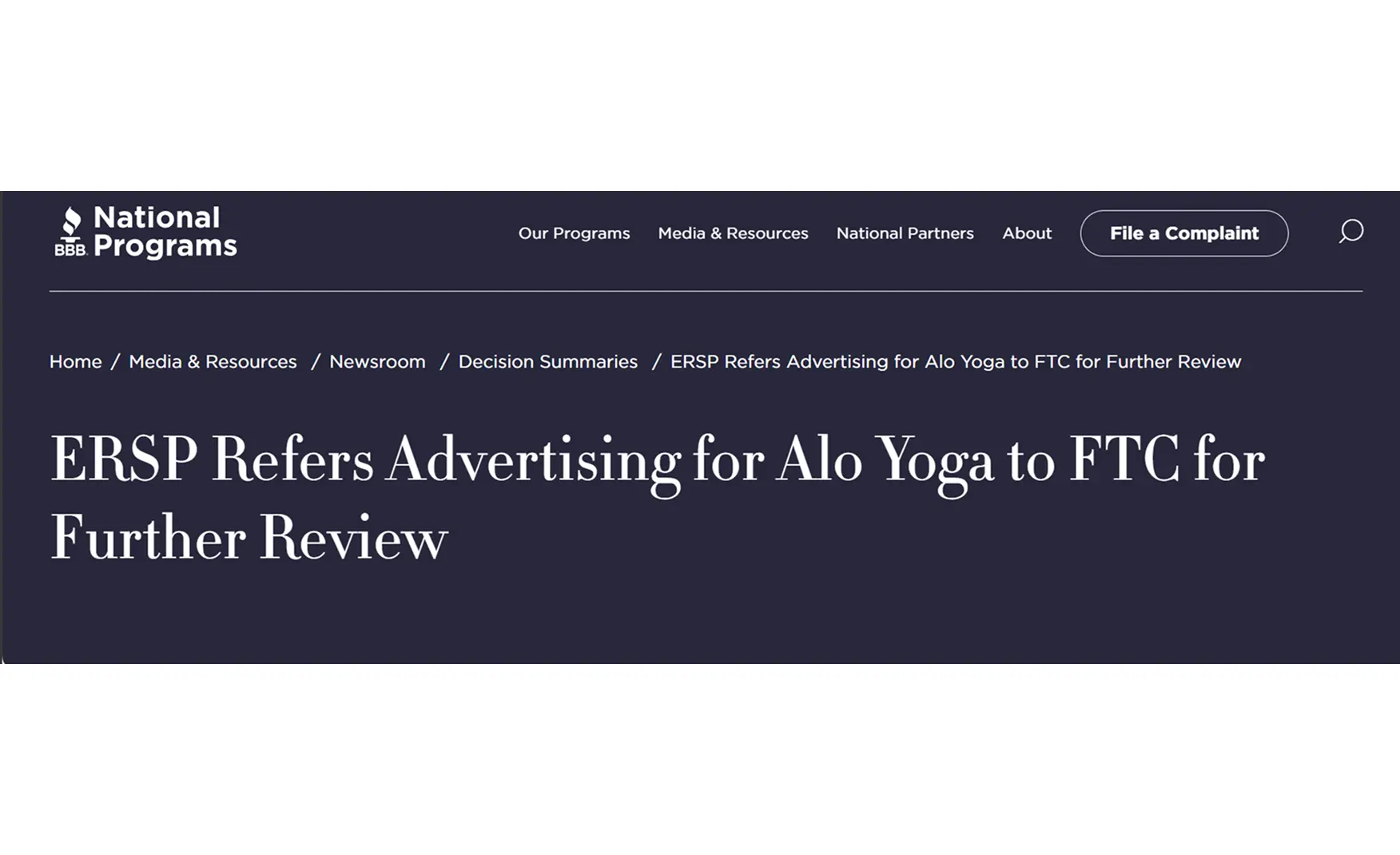
Separately, an advertising watchdog called the ERSP reviewed the situation and found roughly sixty Instagram accounts with undisclosed financial ties to Alo. Disclosure hashtags were often buried below the fold, where nobody would actually see them. Even more telling, the review found that Alo itself had reposted this non-compliant content to its own page.
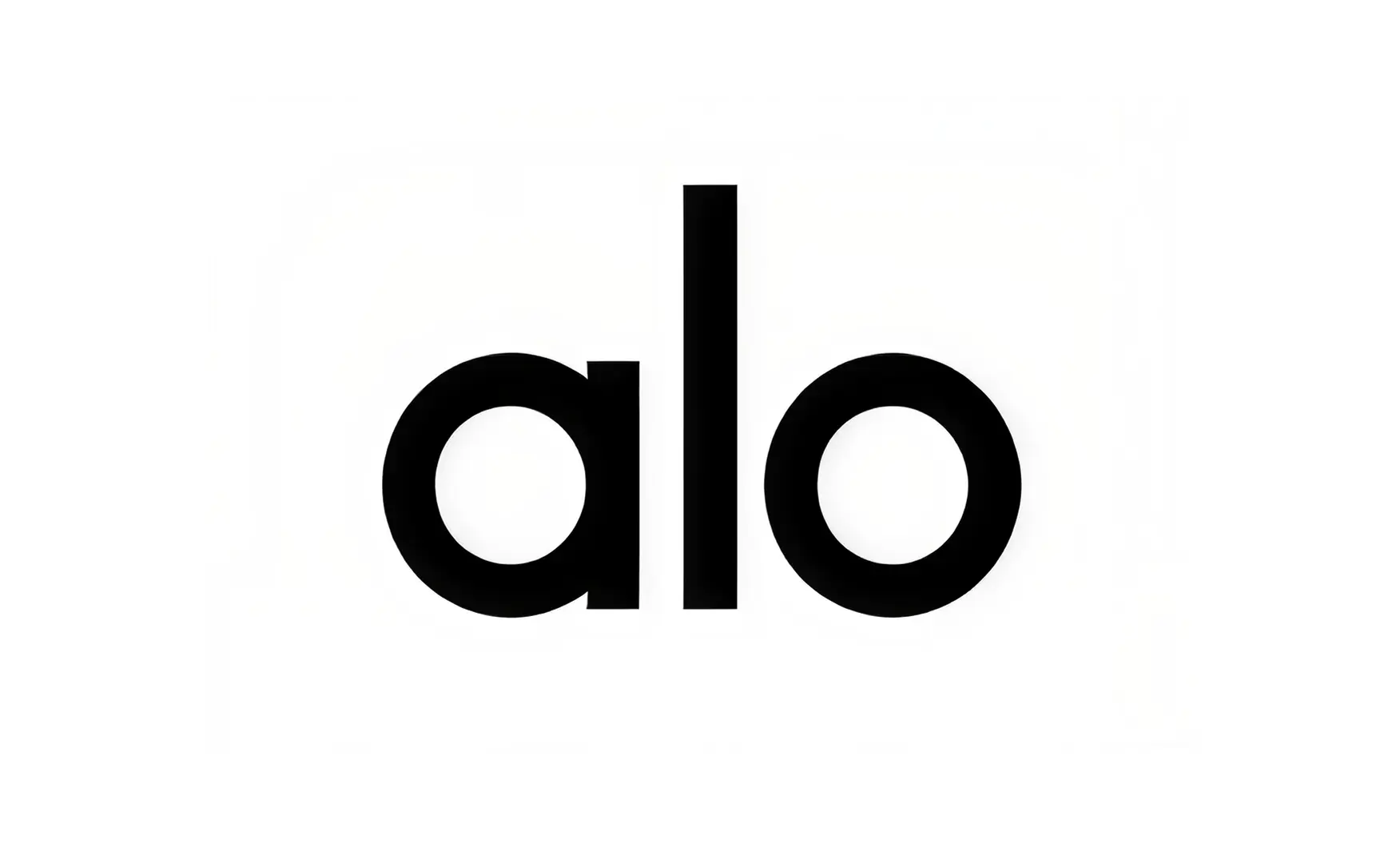
The logo is clean and minimal with no visual hint of the "elements" that derives from the brand name.
That's the gap. The name is doing all the emotional work alone, while the logo simply typesets it in a nice font. If nobody told a customer what "Alo" stood for, the mark itself gives away nothing.
Minimalism can absolutely be a strength. But there's a real difference between being simple on purpose and staying silent by accident.
Everything that gives the name its weight, the founders' own healing, the solar powered office, the sustainability commitments, the schoolchildren's programme, traces back to this one elemental idea. None of it currently shows up anywhere on the label.Screenshot: Alo yoga logo
The most valuable thing Alo could do in the next two years is establish a genuine, verifiable product claim.
A material or technical advantage a customer can feel in a fitting room is the only defence that survives a change in fashion. Because it does not depend on who else is wearing the brand.
Making that claim now, while the brand still has cultural momentum, is easier as people are already watching, so the message tends to land naturally.
Alo's Instagram is polished, but polished isn't the same as distinctive.
Nothing on the feed currently explains why Alo is different from any other premium activewear brand chasing the same clean, minimal aesthetic. There's no hint of the Air, Land, Ocean philosophy, the founders' story, or the studio to street idea that makes the brand genuinely interesting.
It's nice looking content in a visual language most wellness brands already share.
The risk is that Alo built its real growth through organic celebrity wear and word of mouth, not through its own channel. So the feed ends up reading as an afterthought, rather than a place where the brand's actual meaning lives.
Right now, Sanctuaries work as a store and a community space. What they haven't fully tapped into yet is a third job, earning their own money back as a content space.
A flagship built with original brickwork and sculptural details will always look expensive if it's only judged by sales per square foot.
But that same space starts to make a lot more sense once it's treated as something that can bring in its own income too. Rent it out for shoots, brand collaborations, or creator events during the hours it's not full of customers or classes.
The Sanctuary stops being just a place people visit, and starts being a space that quietly pays for itself.
Alo Yoga has built the most coherent marketing system in consumer apparel today. It replaced advertising with gifting, turned its Sanctuaries into media sets, and gave away its own subscription platform, to build a habit.
Danny Harris and Marco DeGeorge still own the whole company in equal halves, which is close to unheard of at a valuation nearing $10 billion after eighteen years.
The challenge is that the same organic, word of mouth story sitting at the heart of the brand is now facing a $150 million lawsuit and findings from an advertising regulator.
On top of that, the founders have just sold the business that originally funded Alo, a clear step toward a possible IPO. Right now, Alo has the money, the margin and the attention it needs to build a real, provable product claim, and a defensible sense of what "organic" actually means, before either the public markets or a court forces that question for them.
If you're building an activewear brand and want your packaging, stores and content to all feel like one clear identity, instead of three separate projects, this is exactly the kind of work we do at Confetti. Get in touch with our team.
Want strategic branding and packaging like this for your business?




.webp)
.webp)

.webp)
.webp)
.webp)
.webp)
.webp)







.svg)
.webp)


.svg)
.svg)






























.webp)






.webp)


.svg)