02
AI Snaps


01
Our Work
03
About Us
04
Brand Audit
05
Contact Us
06
Client Success
12
07
Blogs
08
Careers
Book A Call



Need Help In Building Your Brand?
Click the button below & book a call with our founder directly.

Rishabh Jain
Managing Director
Skims | Confetti's Verdict ⭐⭐⭐⭐ ½
Confetti Design Studio has analysed the category positioning, product architecture and partnership strategy of Skims. Which is a Los Angeles brand that took a product women had been buying quietly for decades and gave them a reason to talk about it.
Founded in 2019 by Kim Kardashian and Jens Grede, with Emma Grede as founding partner, SKIMS built its range around nine or more skin-tone shades per item and sizing from XXS to 5X.
That approach helped it grow from $500 million in net sales in 2022 to over $1 billion in 2025, and it raised $225 million in November 2025 at a $5 billion valuation.
And along the way, it became the official underwear partner of the NBA, and the first outside company Nike has ever launched a brand with.
The audit looks at whether the instinct that made Skims exceptional in shapewear, an instinct that lives as much in the packaging and visual system as it does in the product, can hold up as it gets stretched across several categories at once. This audit is as per October 2026.
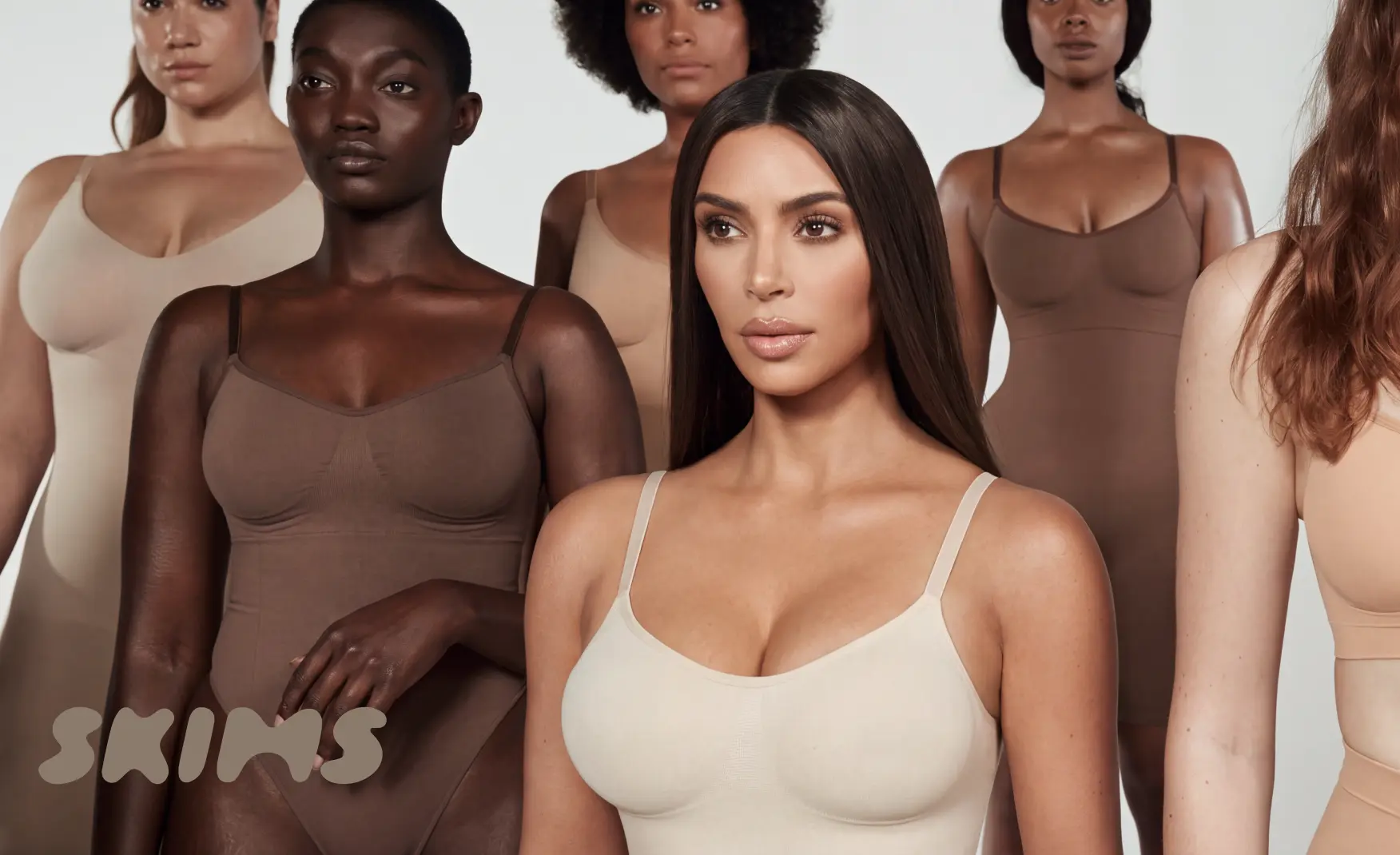
The word “shapewear” made it sound like a body needed fixing, and buying it came with a little embarrassment. Any brand entering that category took on all of that baggage before a customer even saw a single product.
Skims did not enter shapewear. It named a new category, solutionwear, framing its garments as designed with purpose and worn everywhere.
When a category's name already works against a brand, staying inside that category means spending most of the marketing money just trying to change people's minds about a word, before you even get to talk about the actual product.
Skims did exactly that in its very first year. It started calling itself “solutionwear” long before it had the sales or size to back that name up.
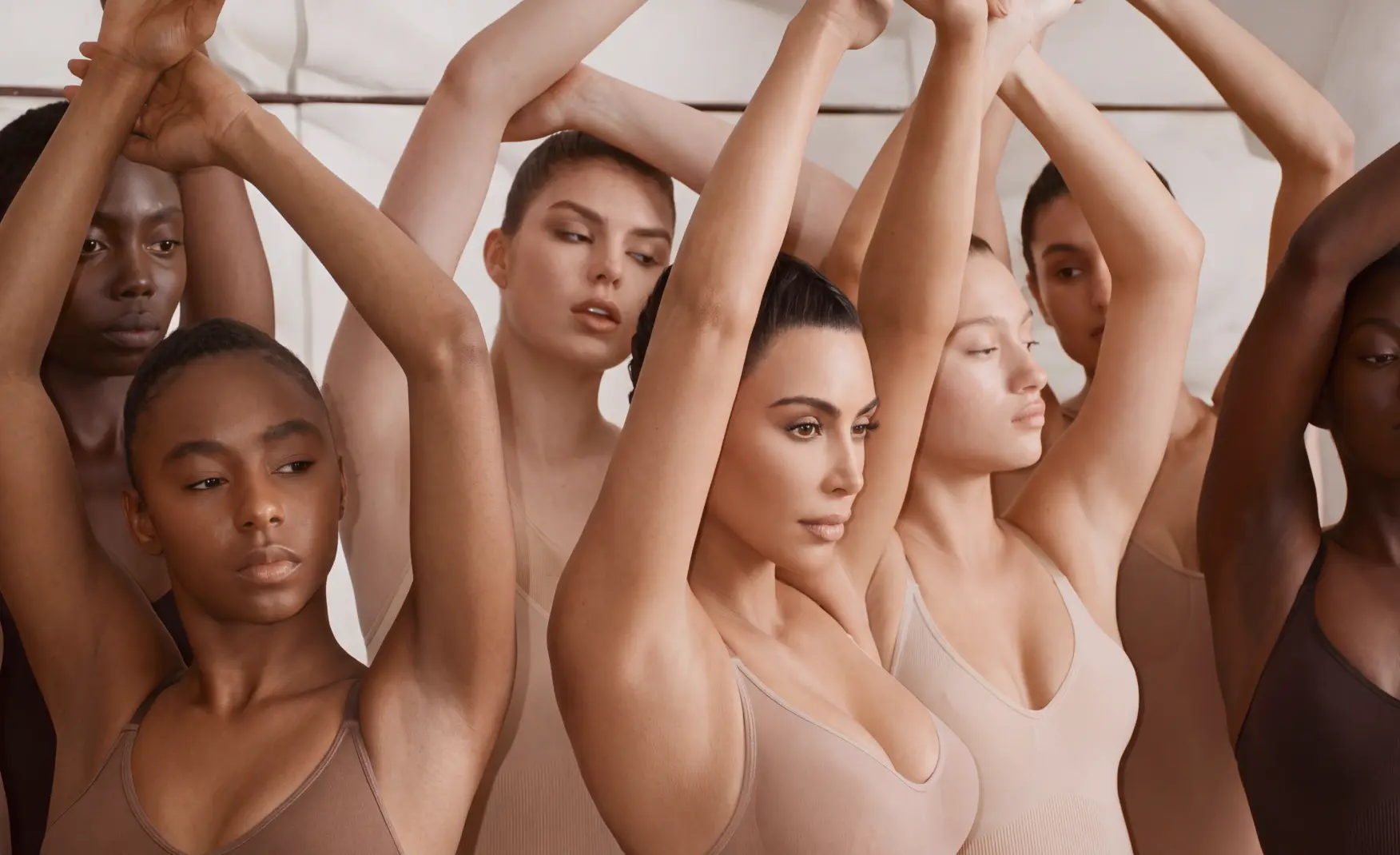
Inclusivity in fashion is usually just a campaign. A broader cast of models, a nice statement, and the actual product stays exactly the same.
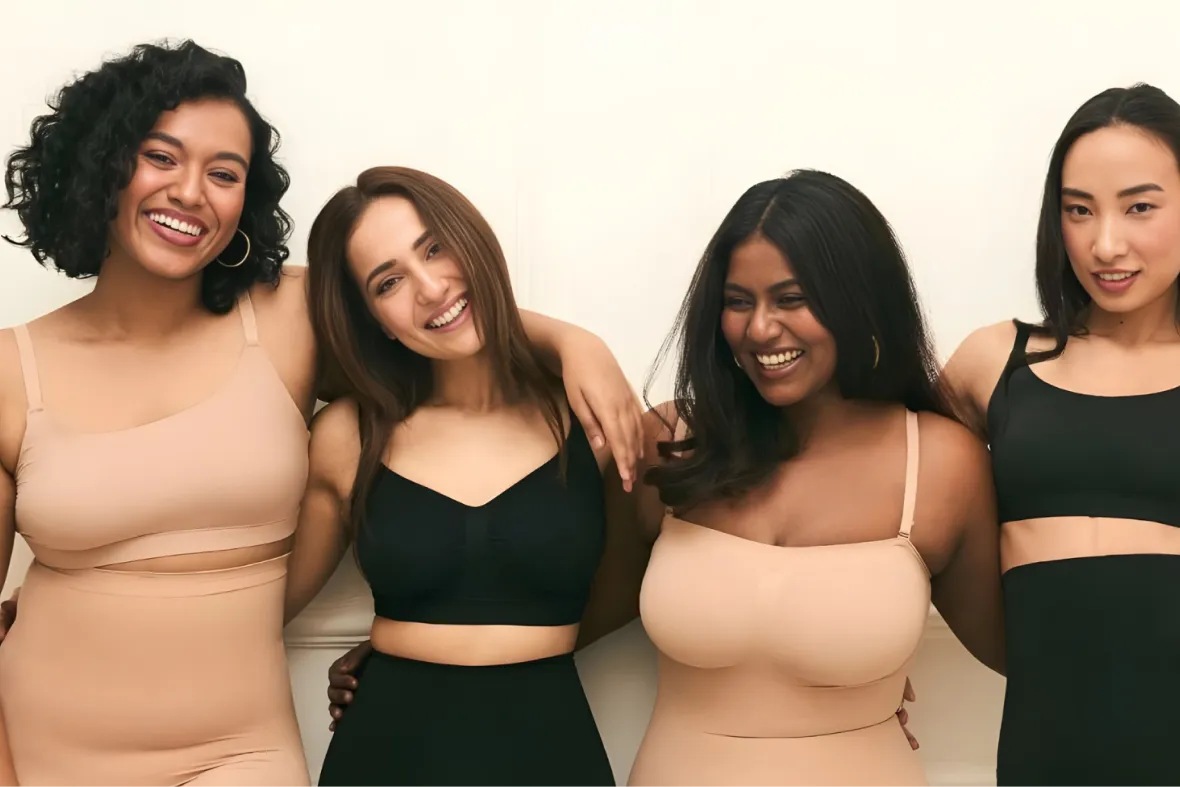
Skims built inclusivity straight into the product itself, nine or more skin-tone shades per item, sizing from XXS to 5X. For something that’s meant to disappear under clothes, matching your skin is simply what the product has to do.
The origin story explains that Kim Kardashian ran into this problem herself. She went looking for shapewear that matched her own skin and simply couldn't find it. That's the kind of small, unglamorous, personal problem that tends to build lasting brands.
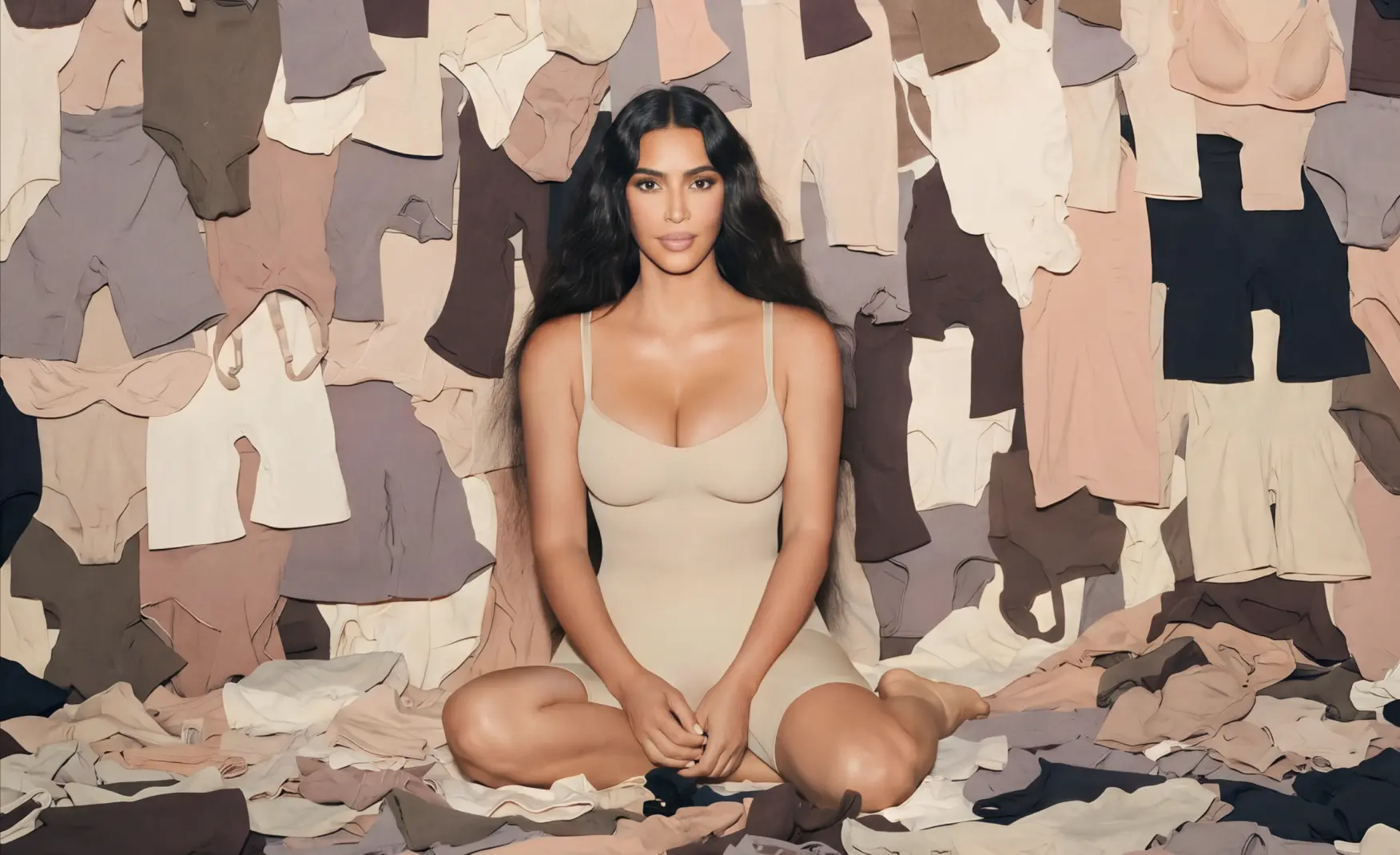
Even the photos are flat, frontal, almost clinical, showing the product on real, different bodies, instead of styling those differences away.
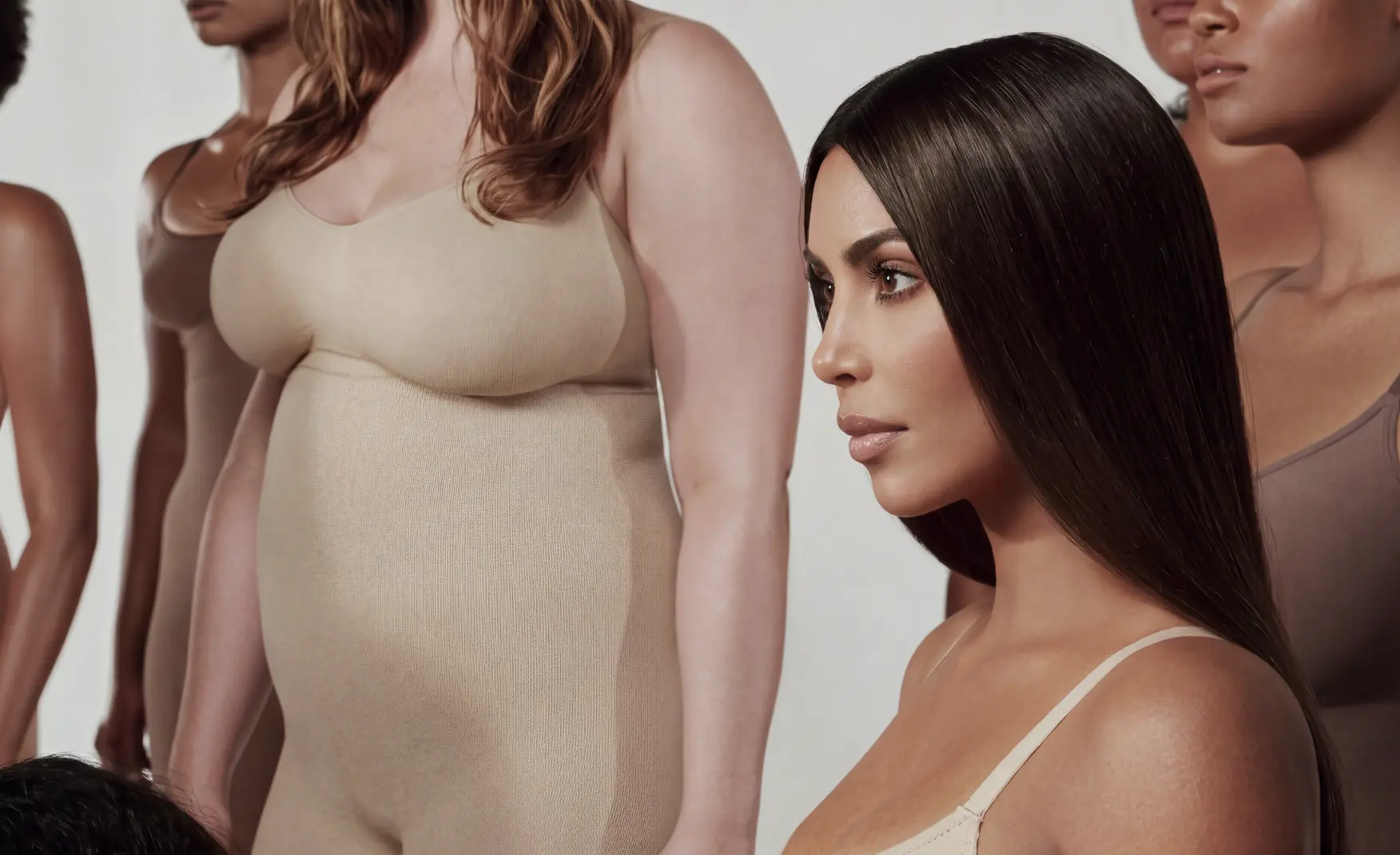
Skims was co-founded by Jens Grede, a serial brand builder behind Frame and the Saturday and Wednesday agency groups, with Emma Grede, co-founder of Good American, as founding partner.
The product range is kept small and clear on purpose, in a category where most brands just keep adding more and more products to fill shelf space.
Jens Grede put Skims' 2023 net profit at approximately $190 million.
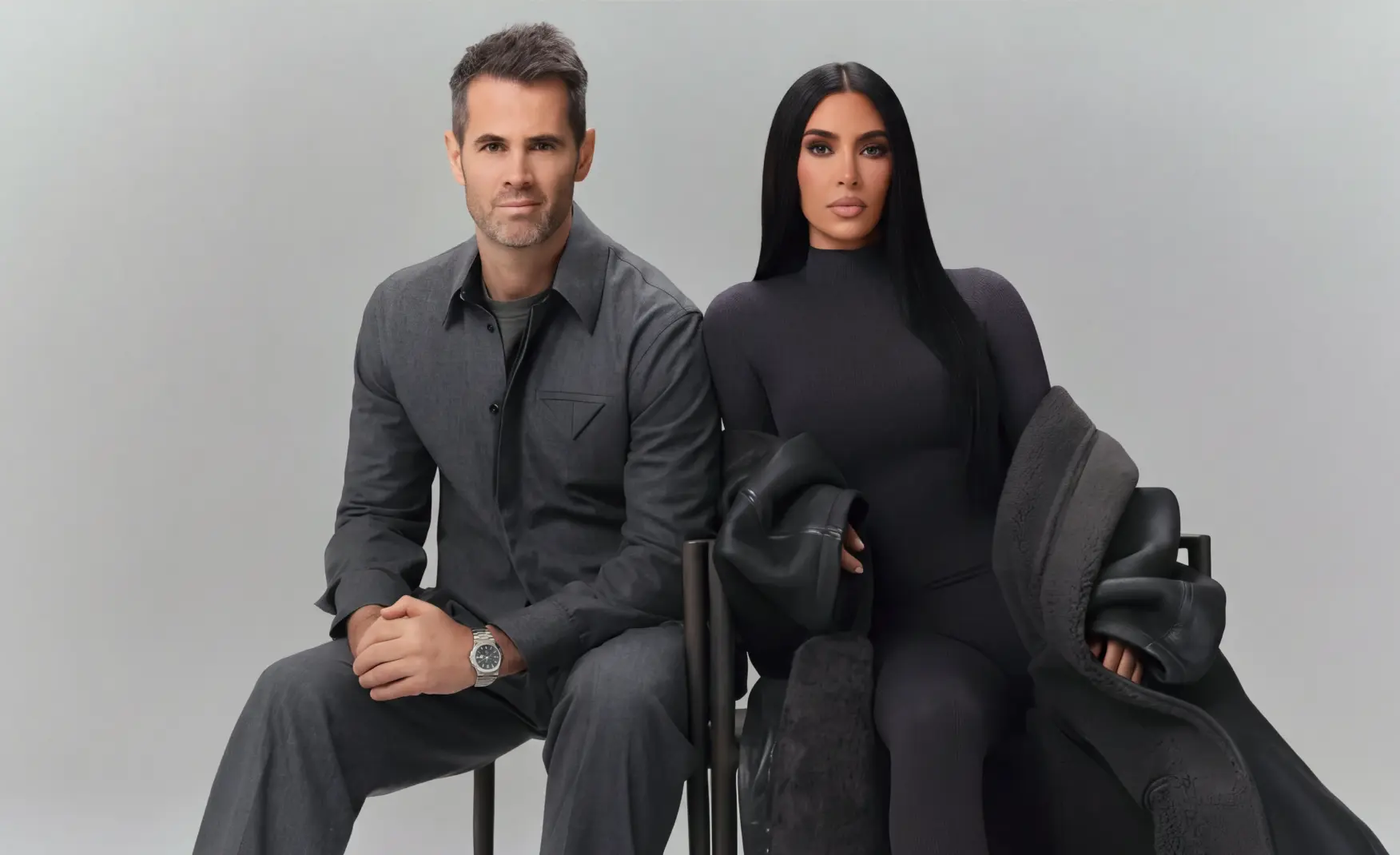
A brand built on celebrity and shapewear can only go so far by itself. At some point, there's a limit to how seriously people take it, no matter how good the product is.
Skims broke through that ceiling with real partnerships.
In October 2023, just four years after launching, it became the official underwear partner of the NBA, WNBA and USA Basketball.
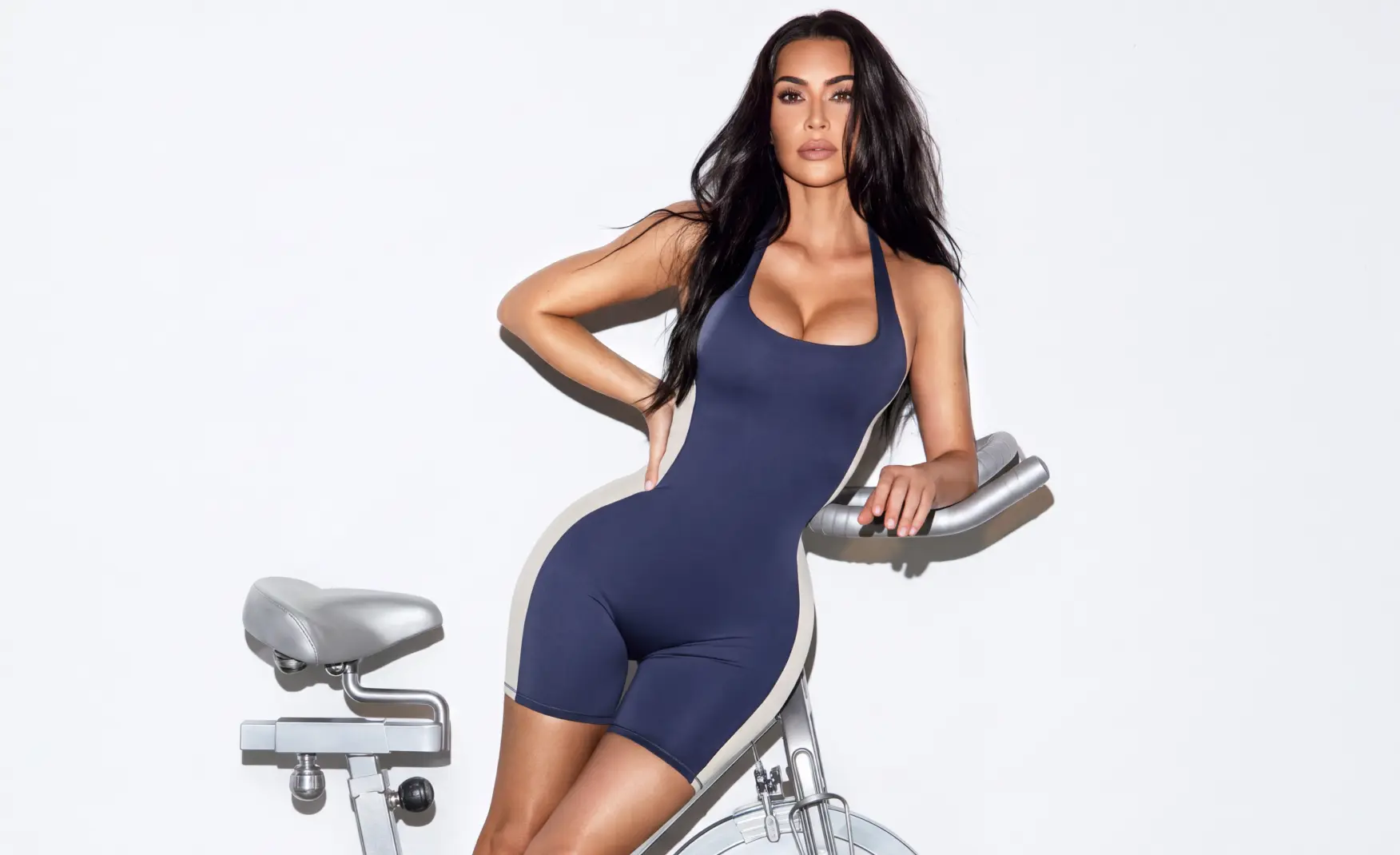
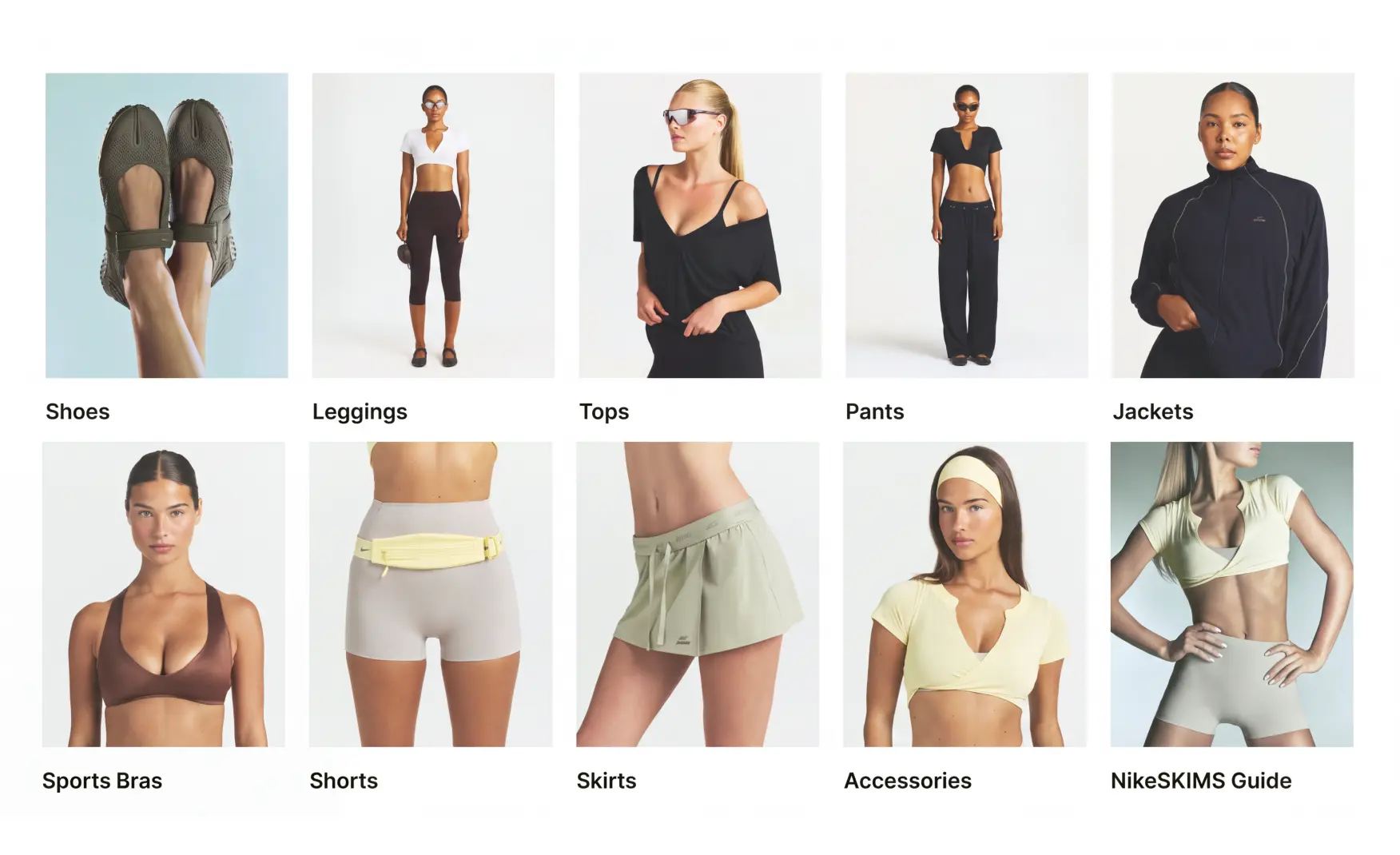
The bigger move was NikeSKIMS, a joint venture with Nike. This is the first time in Nike's history it's ever launched a new brand alongside an outside company. It debuted in September 2025, and by Spring 2026, it had grown into a full head-to-toe activewear line, including footwear.
Through these deals, Skims earned a level of credibility that usually takes decades to build.
And in return, Nike and the NBA got something valuable too, real access to a wider range of customer base.
Screenshot: NikeSKIMS collection imagery or the NBA partnership announcement visual, from NikeSKIMS campaign materials or skims.com.

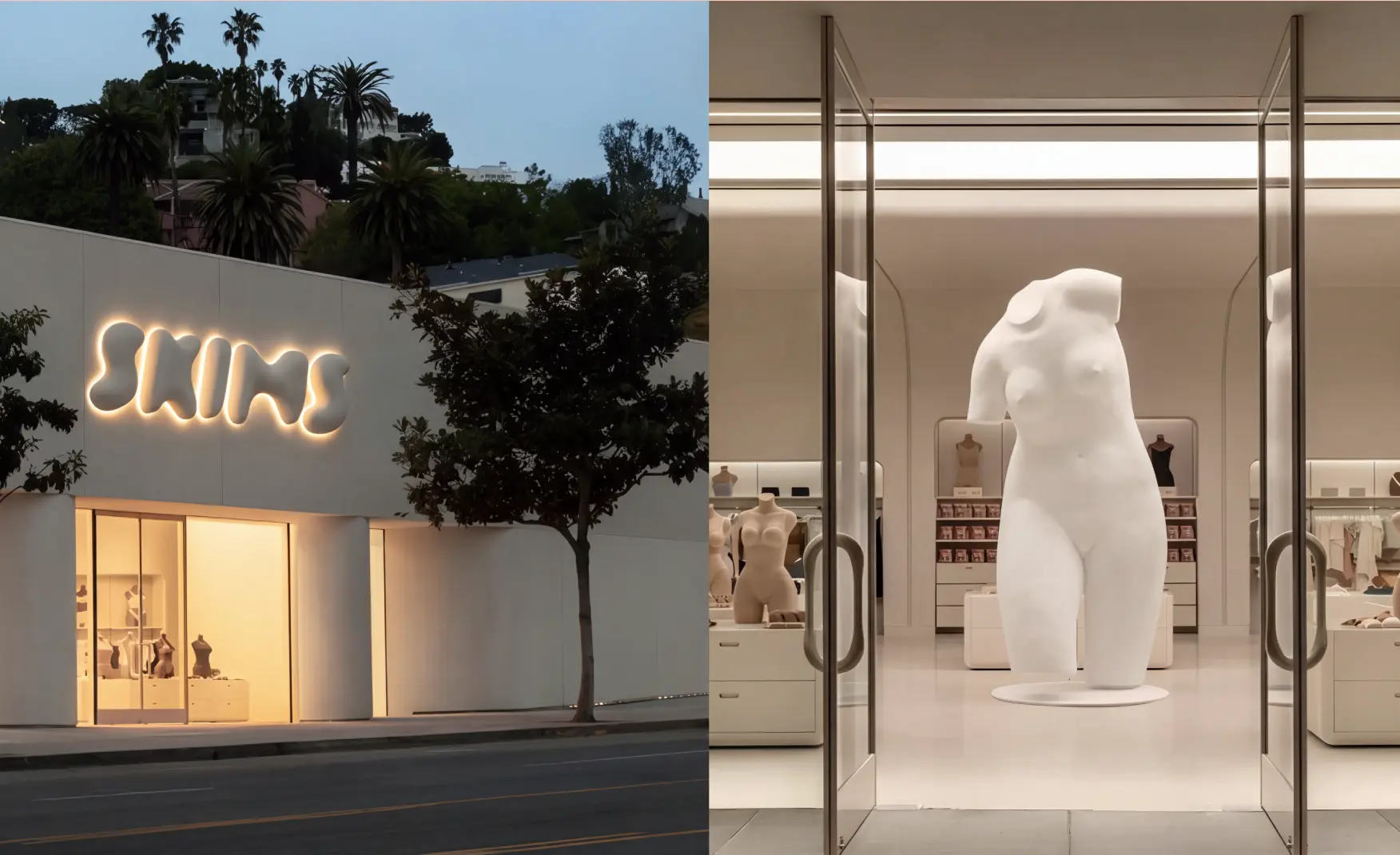
Skims spent its first five years building purely online and just very recently it has moved into physical retail.
The stores are big and clearly planned.
A 4,546 square foot flagship on LA's Sunset Strip in April 2025. A 6,500 square foot store in Chicago's Gold Coast in February 2026.
Its first permanent Middle East location at Mall of the Emirates in December 2025. And a 12,000 square foot flagship on London's Regent Street, opened in July 2026.
This matters because of what Skims actually sells. When a garment's whole job is matching someone's skin tone and fitting their exact body, trying it on solves the biggest reason people hesitate to buy.
Ten shades on a screen, and people tend to put off that decision. Ten shades on a rail, something they can actually touch and try, and that decision takes about ninety seconds. Far fewer of those purchases end up getting returned too.
Building demand first, and stores second, meant something simple, Skims stores opened into cities that already knew and wanted the brand.
The name Skims is a hybrid of the words "skin” and "Kim”.
Before Skims even existed, Kim Kardashian was already cutting shapewear apart with scissors and dyeing it herself, just trying to get it to match her own skin. So by the time Skims actually launched, it wasn't some brand new idea. It was a fix she'd already tested on herself, alone, for years.
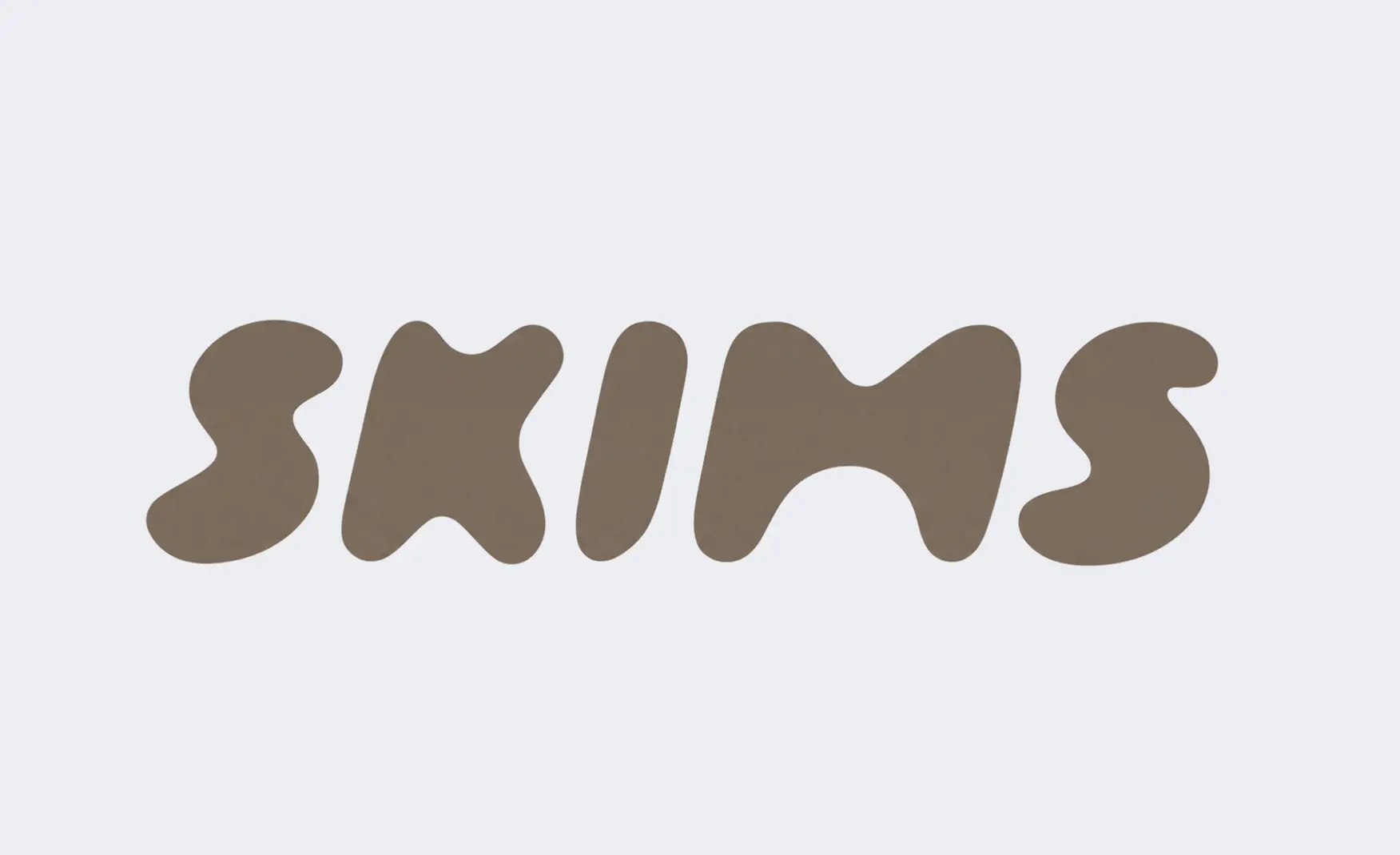
The logo tells the same story.
The letters are soft and rounded, not sharp. The two S's don't even match in weight, that's on purpose.
And the colours of the wordmark shift through different browns, beiges and taupes, just like the shade range itself.
The logo stays quiet and simple for a reason. Skims was never meant to steal the spotlight in an outfit. That spotlight belongs to the person wearing it.
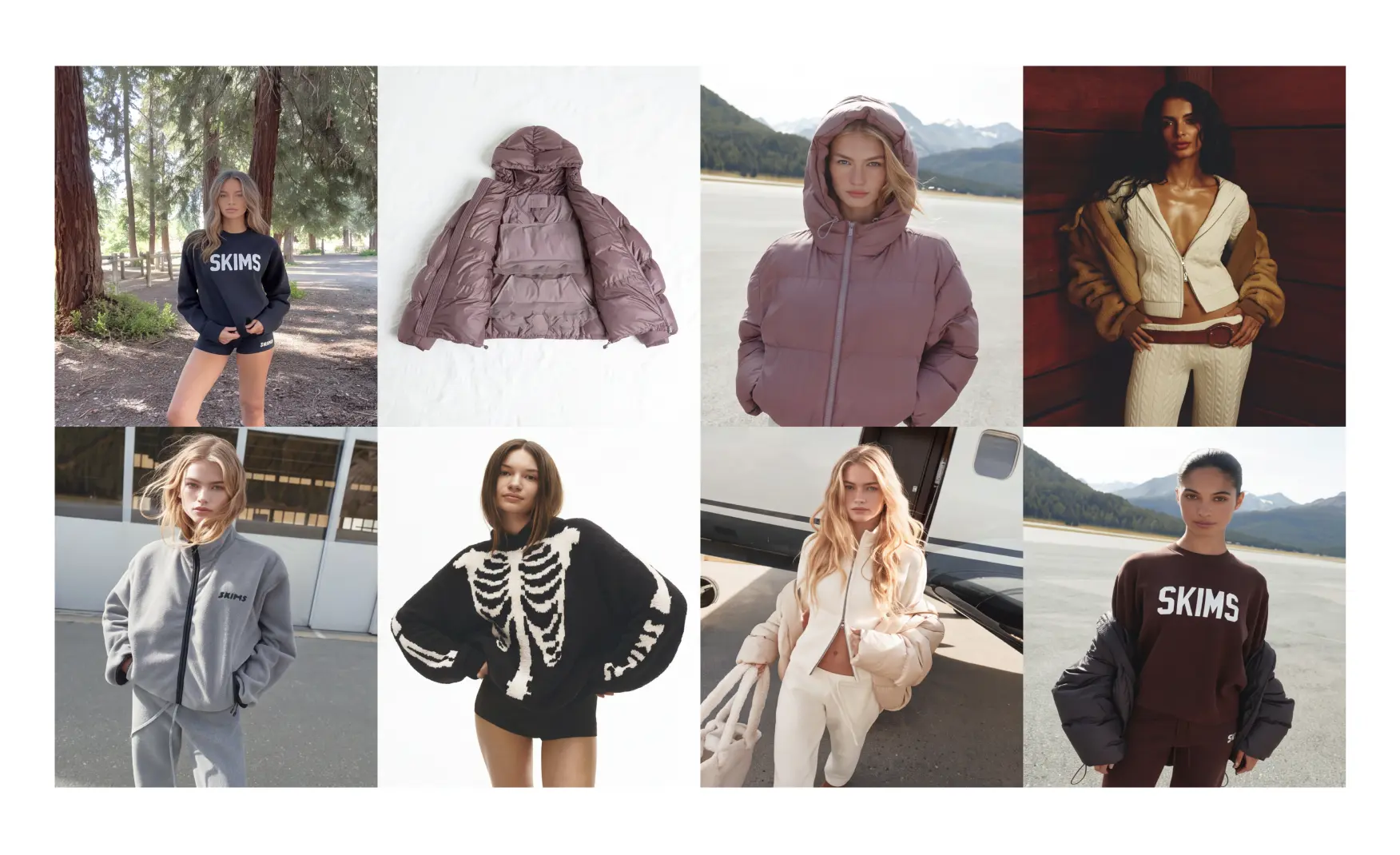
Skims' Instagram doesn't feel like a static product catalogue. It feels alive, a running archive of everything the brand is doing right now.
New launches sit next to celebrity collaborations, and right alongside them are posts from real customers. Actual people, in their own homes, wearing the product just as it looks on a campaign set.
The highlights help too. There are separate sections for celebrity collaborations and for brand partnerships, so nobody has to dig around. The whole story of who Skims has worked with is right there on the profile.
It's a feed that does a few jobs at once. It shows the product, it shows the culture around it, and it shows real people actually living in it.
Skims’ reach, its speed of growth and a lot of its cultural pull all run through one person, Kim Kardashian.
That’s a real risk because usually celebrity-led brands often sell the celebrity first and the product second. And once you take the celebrity away, you would notice that many of them have very little left.
Now imagine Kim stepping back from Skims, or her public image taking a hit. People would look at the brand differently, almost overnight.
Some would stay for the product. But plenty may have been buying her name all along.
That’s the weak spot because when a founder’s image shifts, the brand feels it straight away.
Jens Grede does help. He’s the reason Skims has a real business and an identity behind it, beyond one famous face. But most people still buy Skims because of Kim, not because of the shade range and fit that make the product so good.
Until that changes, the brand’s biggest strength is also its biggest risk.
Skims has come a long way from where it started.
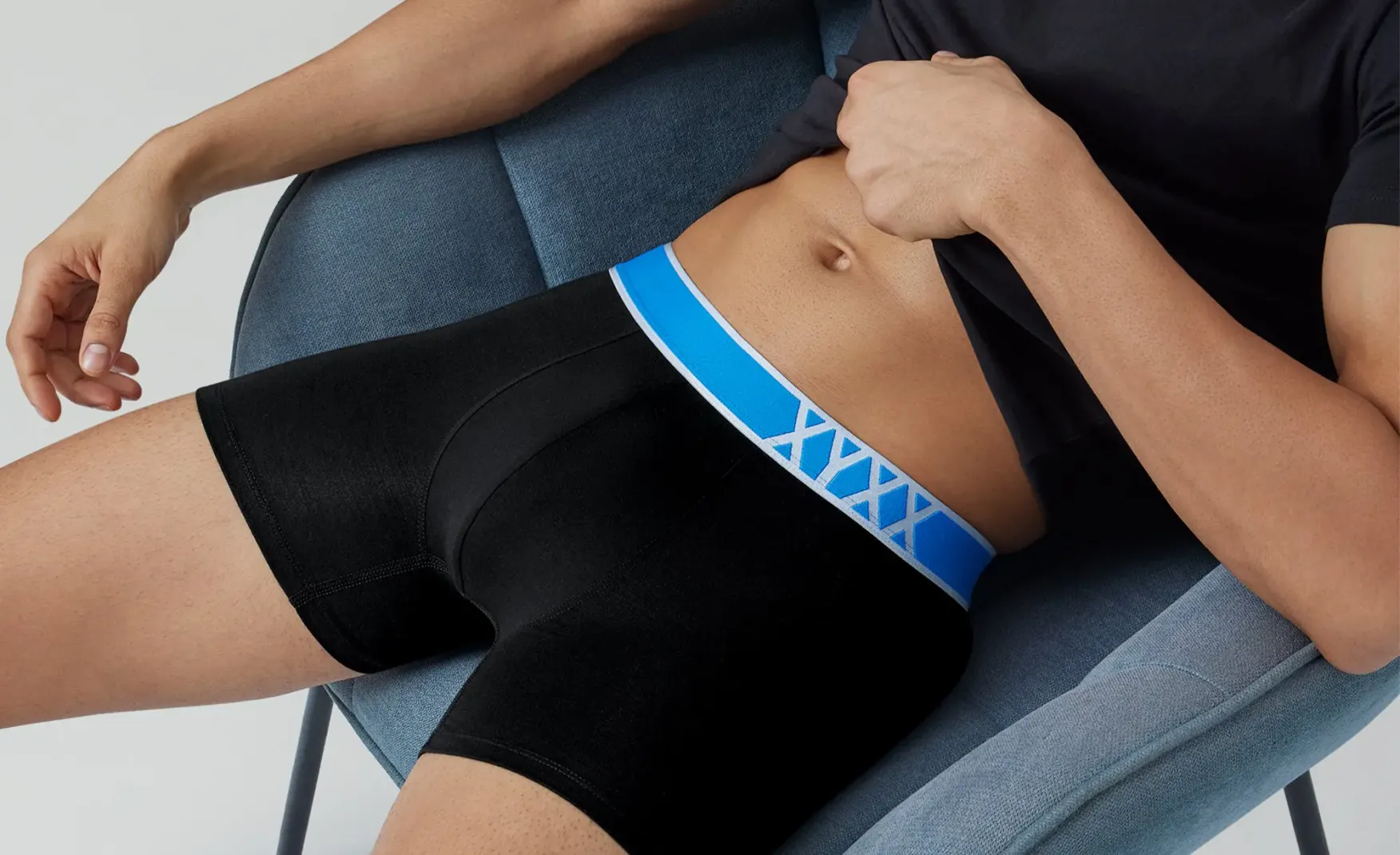
Underwear, loungewear, menswear, now a full activewear line with footwear too.
Each step on its own makes sense. And "solutionwear" gives it room to keep going, because almost anything can be framed as solving a problem.
In shapewear, Skims had two real advantages. Kim Kardashian had lived the problem herself, so she knew exactly what was missing. And nobody else had built a shade range like this one, so customers had nowhere else to go.
Activewear is a different game. The category is already full of huge brands with deep pockets and years of experience. What people care about most here is how the clothes perform, whether they stretch, hold up in a workout, and feel good while moving. Matching skin tone just isn’t the main concern.
That means the edge that made Skims special in shapewear doesn’t automatically come with it. In activewear, it has to win people over on something new.
The November 2025 round valued Skims at $5 billion on roughly $1 billion of net sales.
That is up from $4 billion in July 2023 and $3.2 billion in January 2022.
That kind of valuation only makes sense if growth keeps up at close to the same pace as before. And that depends on newer categories doing as well as shapewear did, in markets where Skims doesn't have the same edge.
A big chunk of that future growth now runs through NikeSKIMS, a joint venture Skims doesn't fully control, so even the wins there end up shared, not owned outright.
Screenshot: Fits Everybody trademark filing coverage or Skims Fits Everybody product line imagery.
Skims actually has real product strengths, the shade range, the size range, the fit engineering. These are things worth buying for on their own.
Right now these are just supporting evidence behind Kim Kardashian's name. When they should be the main reason people buy.
That means explaining the shade-matching properly, as an actual system, not just "pick your colour," and being specific about how the fabric is actually developed.
A brand that builds a real product reason to buy, while the founder's still popular, protects itself. If that celebrity pull ever fades, there's still a business left standing.
Skims opening more stores makes sense. But the way those stores look and work should come from what the product is for.
Shapewear has to match your skin and fit your body. So a Skims store should feel like a place to find your shade and your fit and not like a normal clothes shop.
The lights should show your skin colour as it really is. Make the fitting rooms big enough to try on a few shades at once. And put the products together by skin tone and body type, so people can find what suits them without searching through collections.
Skims is one of the most efficient brand builds of the last decade, and the efficiency came from two decisions taken at the start.
It renamed its category, escaping decades of associations that would otherwise have cost it a fortune to argue with, and it engineered inclusivity into the product architecture with nine or more shades per item and XXS to 5X sizing.
Around that sits real operational strength, something most celebrity brands don't have, brought in by co-founder Jens Grede and founding partner Emma Grede.
On top of that, two major partnerships gave the brand institutional credibility in just six years, credibility that usually takes sixty.
If you’re building a clothing brand and want your name, your positioning and your product design all solving the same problem together, this is exactly the work we do. Get in touch with our team at Confetti.
Want strategic branding and packaging like this for your business?